Introduction
The manufacturing of the equipment must be carried out in an environment that would be dependent on the nature of the device itself. Examples of such medical devices are implants, catheters, surgical equipment, and diagnostic parts. This means that the design of the cleanroom that would be used in the production of the medical devices would depend on the process itself.
However, the design of a good cleanroom makes it possible for the control of airborne particles, uniform handling, and ease of cleaning and monitoring. It is important to note that although the existence of a good cleanroom is necessary for quality assurance, there are other factors as well.
Why Are Cleanrooms Important in Medical Device Manufacturing?
Contamination may affect the quality of the product, the efficiency of the manufacturing process, and even, in some cases, the safety of the patients. A clean environment is crucial for reducing the risks of contamination in the process of production.
The level of control needed depends on the category of the device, its use, materials, and sterility of the product before use.
There are a number of benefits that are associated with a well-designed clean room for medical devices:
- Reduces the risk of contamination in critical stages of production.
- Ensures controlled manufacturing process.
- Protects delicate components during the process of assembly and packaging.
- Better control of cleaning and people.
- Maintains quality and compliance.
Not all medical devices need the same clean room classification.
Essential Cleanroom Requirements for Medical Device Manufacturing
1. Select the Appropriate Cleanroom Classification
There is a need to classify the correct classification while designing a clean room for making medical devices. There is a need to understand the process involved requiring environmental control and the effects of contamination.
ISO 14644-1 provides guidance on how one should classify clean rooms according to airborne particulates. The classification will be dependent on the manufacturing process, sensitivity of the product, and the necessary cleanliness.
Among some of the issues that need to be considered include:
- Types of medical devices one is intending to make.
- Sensitivity of components to airborne particulates.
- Whether the device will be manufactured and packaged in a controlled environment.
- Effects of contamination.
- Quality and regulatory issues.
- There is need for proper evaluation and documentation of the selected classification. ISO Class is not a guarantee of sterility or regulation compliance.
2. Design an Effective HVAC and Air Filtration System
HVAC is utilized to control the environmental conditions necessary for cleanroom operations. The system can control such variables as air flow, temperature, humidity, and pressure differences among the designated areas.
High-efficiency particulate air (HEPA) filter can be incorporated in the HVAC system if necessary.
An efficient HVAC system should have:
- Appropriate air distribution in the room.
- Appropriate air filtration.
- Temperature and humidity control.
- Pressure differences among the designated areas when necessary.
- Filter inspection and servicing capability.
- Documented testing and maintenance of the system performance.
HVAC system design should take into consideration the room geometry, equipment operation, personnel movement, and contamination risk.
3. Choose Suitable Cleanroom Construction Materials
The walls, floors, ceilings, doors, and work surfaces in the cleanroom shall be durable, cleanable, and compatible with the cleaning agents used to maintain them in a clean state.
Poor jointing, damaged finishes, and inaccessible areas may cause accumulation of particles or residues, which will create problems in cleaning and risk of contamination.
Construction-related factors to keep in mind are:
- A smooth wall/ceiling finish.
- Durable floor finish appropriate for manufacturing processes.
- Sealed joints/penetrations.
- Cleanroom-appropriate doors and windows.
- Compatibility with cleaning materials.
- Inspection helps in identifying cracks, improper sealing, and worn surfaces.
4. Establish Cleaning and Disinfection Procedures
The processes of cleaning and disinfection will help to comply with the requirements concerning the environmental conditions.
The producer needs to formulate written procedures for conducting the cleaning process and to establish the frequency of this process and the personnel responsible for it.
A proper system can include:
- Cleaning of the floor, walls, work surfaces, and equipment if needed.
- Using proper cleaning equipment and materials.
- Disinfection at a certain concentration and for a certain contact time.
- Preventing the spread of contamination in other rooms.
- Documentation of the process of cleaning.
- Investigation of non-compliance and recurring failures.
In case the contamination by microbes is possible, the techniques of cleaning and disinfection have to be consistent with the hazards associated with the product and process.
Changing the schedule of cleaning in accordance with changing production, equipment, and hazards.
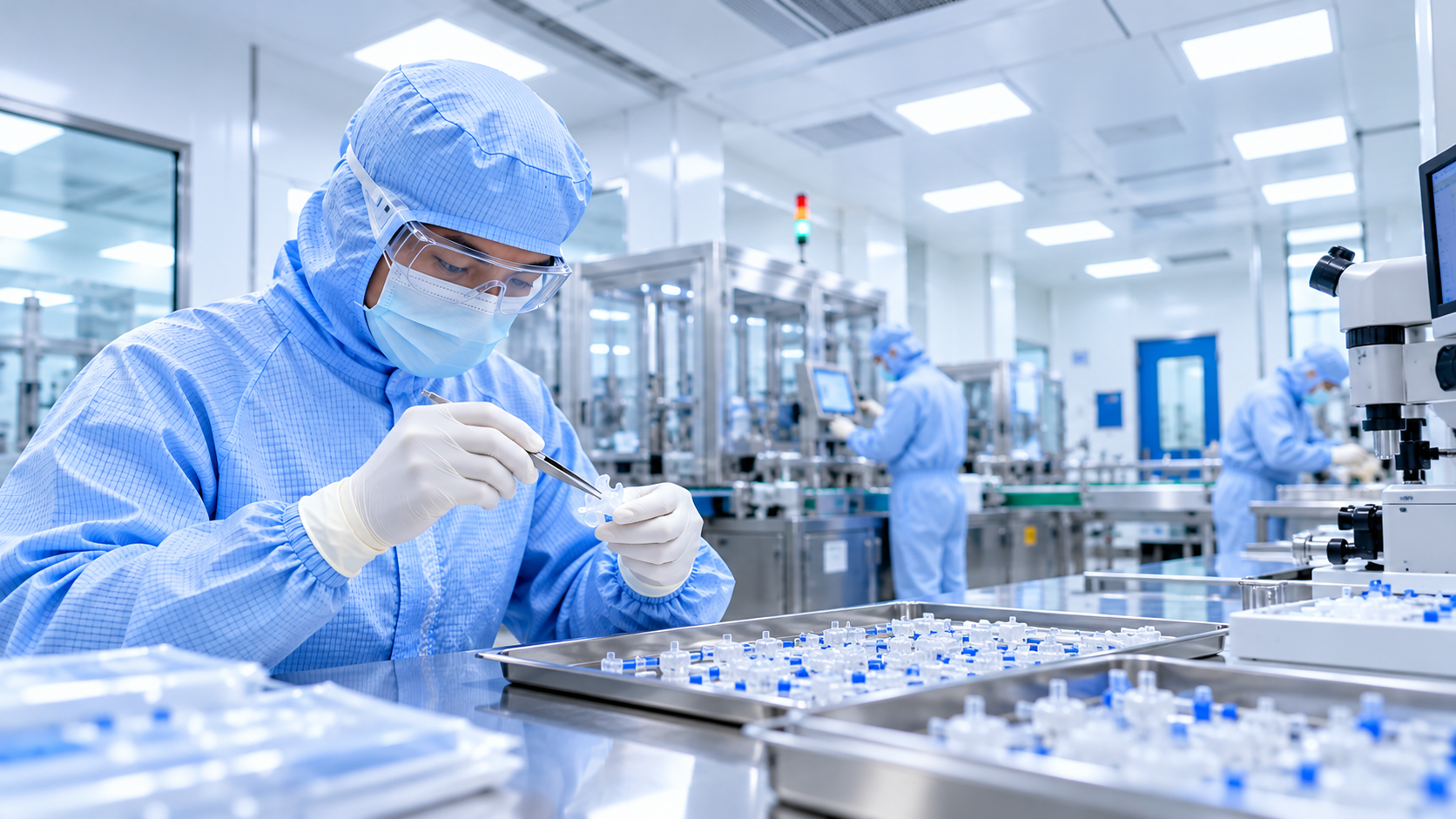
5. Implement Personnel Hygiene and Gowning Controls
Individuals are capable of becoming sources of particles and microorganisms in controlled environments. In such a case, appropriate gowning and hygiene procedures should be undertaken.
It becomes imperative for manufacturers to develop guidelines regarding entry into cleanrooms, wearing of protective garments, handwashing, and movement in controlled environments.
Some important procedures that should be undertaken include:
- Supplying appropriate cleanroom garments.
- Training individuals regarding the proper procedure of gowning.
- Developing appropriate entry and exit procedures.
- Control over the introduction of tools and materials.
- Training individuals whenever there is a change in procedures.
- Individuals should be made aware of how their actions affect the contamination process.
6. Establish Environmental Monitoring
Monitoring is used to determine whether a clean room is still operating within its specified parameters.
Depending on the nature of the facility and its manufacturing process, monitoring may include measurements of airborne particulates, temperature, humidity, differential pressure, and even microbial sampling if required.
The facility manager is responsible for selecting where, how often, what parameters are acceptable, and who is responsible for the monitoring activities. The instruments used for monitoring have to be in good working order and calibrated.
In case there are deviations in the data obtained, the facility manager is responsible for recording and investigating them. Trends analysis will allow identifying recurring problems.
Equipment Maintenance and Documentation
The machinery has to be suitable for the cleanroom environment and be controlled via an effective preventive maintenance program.
Testing of equipment, calibration of instruments, maintenance of filters and environment tests have to be documented. If the equipment undergoes any modification or servicing, there is a need to do another performance verification.
The companies have to maintain the documentation on cleaning, maintenance, calibration, environmental monitoring, personnel training, deviations and corrective actions.
Conclusion
In the manufacturing of the devices, there should be clean room standards which should be adjusted according to the products, process and possible contamination risks. The right classification, the design of the HVAC systems, the use of right materials for construction, cleaning procedures, personnel control and environmental monitoring and maintenance are very important for providing good manufacturing conditions.
With careful consideration and performance evaluation of these, there will be minimal risk of contamination.