Cleanroom Maintenance Checklist: Essential Tasks for Facility Managers
Introduction
Keeping the cleanroom is dependent on continuous observation, cleaning and inspection of the equipment. In many cases involving pharmaceutical, biotechnology, electronic, and medical devices companies, even the slightest contamination has a bearing on product quality and safety. With a well-thought cleanroom maintenance checklist, facility managers can ensure control of the environmental conditions of the room, as well as minimizing contamination.
The use of a cleanroom maintenance checklist goes a long way in ensuring that all equipment is functioning well before serious and costly faults emerge. Each of the activities listed in a cleanroom maintenance checklist is crucial in ensuring that the room works well.
Why Is a Cleanroom Maintenance Checklist Important?
A clean room is run under controlled conditions to minimize particle contamination, microorganisms, and any other contamination. But these conditions tend to be compromised without adequate maintenance.
A detailed cleanroom maintenance checklist assists in maintaining consistency, assigning tasks, and recording completion. In addition, it promotes preventive maintenance and minimizes the likelihood of equipment breakdowns.
The process of maintenance for pharmaceutical facilities plays a critical role since it impacts the quality of production directly.
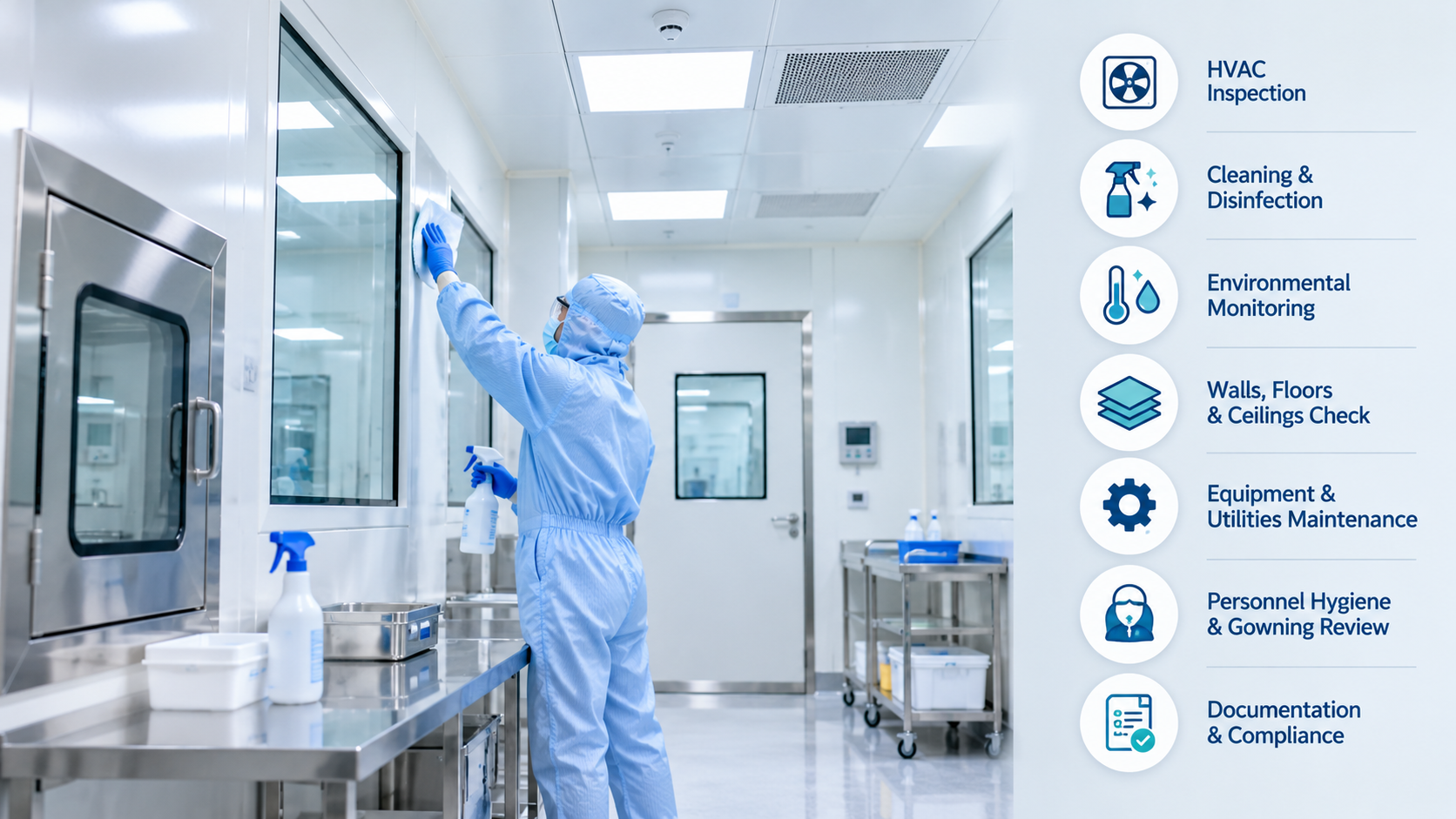
Essential Cleanroom Maintenance Checklist
1. Inspect HVAC and Air Filtration Systems
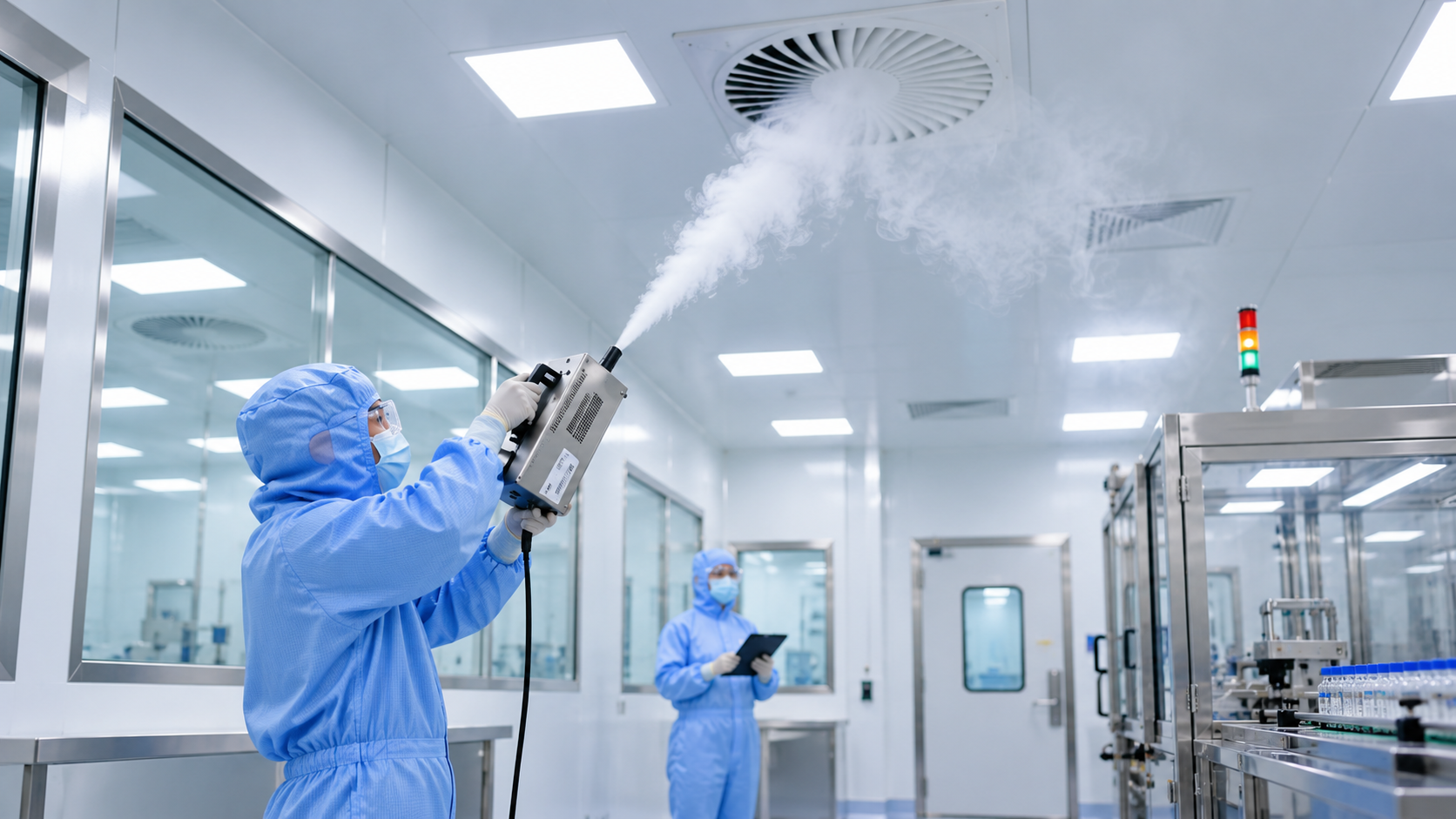
The HVAC system is vital for ensuring the proper environmental control within the clean room. The HVAC system controls air movement, temperature, humidity, and pressure differentials among various specified areas.
The facility managers should conduct periodic checks on the HVAC system to ensure that there are no problems in its performance.
Some of the maintenance practices include:
- Ensure that the temperatures and relative humidity readings remain within the accepted operating parameters.
- Verify pressure differentials among clean room areas.
- Check the integrity of HEPA filters for damage and any leakage signs.
- Review the airflows and air changes if necessary.
- Conduct filter integrity tests as per the facility’s maintenance program.
- Ventilation systems’ checking and recording of unusual readings.
2. Perform Routine Cleaning and Disinfection
Cleaning and disinfection are an integral part of the cleanroom maintenance checklist. Residues, dust, and microorganisms may form in the floors, walls, work surfaces, and equipment in the event of irregular cleaning practices.
It is important for facility managers to make sure that qualified personnel undertake the cleaning process using proper cleaning products and disinfectants.
This involves the following activities:
- Cleaning of floors, walls, doors, and work surfaces based on the approved cleaning schedule.
- Disinfection of surfaces and equipment often used.
- Using appropriate mops, wipes, and other cleaning supplies for cleanroom.
- Observing proper concentration and contact time of the disinfectant.
- Rotating or changing disinfectants depending on the validated cleaning programme.
- Monitoring cleaning activities and investigating any missed activities.
- The frequency of cleaning should depend on the cleanroom class, processes, and other requirements.
3. Monitor Environmental Conditions
Environmental monitoring is essential in helping establish whether the cleanroom remains within its specifications. Managers need to evaluate the monitoring data and investigate any deviation.
The cleanroom maintenance list must include the following monitoring:
- Concentration of airborne particles.
- Temperature and humidity.
- Pressure differentials of the room.
- Microbial contamination, where applicable.
- Airflow in the critical areas.
- The frequency of the monitoring and the acceptable limits should be determined based on the specific purpose of the facility.
- Any unexpected findings must be evaluated using CAPA.
4. Inspect Cleanroom Walls, Floors, and Ceilings
The construction materials used for cleanrooms should be in good condition in order to ensure proper cleaning and contamination control is possible. The presence of any kind of damage on the surfaces might lead to the formation of spots where contaminants can accumulate.
Some of the things that managers of facilities have to look for include:
- Inspect walls and ceiling panels for signs of damage.
- Check floor coverings for any type of damage, such as cracks or peeling.
- Check joints and sealants for any kind of openings or gaps.
- Ensure that doors are properly closed and seal tightly.
- Damage on surfaces has to be repaired immediately using the right materials.
5. Maintain Cleanroom Equipment and Utilities
Equipment breakdowns can cause disruptions and impact the functioning of cleanrooms. Inspection and maintenance can help keep the necessary systems working in good condition.
Some of the tasks that need to be carried out in order to maintain the facility may include the following:
- Inspection and servicing of air handling units.
- Testing of pressure gauges and environmental sensors.
- Maintenance of pass boxes and interlocking doors.
- Inspection of cleanroom lighting and electrical system.
- Checking the performance of critical process equipment.
- Checking the maintenance and calibration log book.
- Equipment that needs to be calibrated should be maintained as per recommended schedules. The maintenance tasks should be done in such a way as not to introduce contamination.
6. Review Personnel Hygiene and Gowning Procedures
Personnel may introduce contaminants and microorganisms into the controlled environment. Cleanroom maintenance also entails an assessment of the measures that are put in place to prevent the contamination of the cleanroom by human activities.
Facility management must ensure that the personnel are properly trained on the correct entry procedures.
Some important assessments include the following:
- Availability of appropriate cleanroom attire.
- Damage and contamination of the cleanroom clothing.
- Adherence to hand washing and dressing procedures.
- Proper entry and exit procedures.
- Provision of additional training in case there are procedural gaps.
Recommended Cleanroom Maintenance Schedule
Structured maintenance scheduling makes task delegation and accountability more manageable.
Daily tasks
- Assess visible cleanliness and inspect for surface damage.
- Monitor temperature, humidity, and pressure levels.
- Complete scheduled cleaning and disinfection activities.
- Report any operational anomalies.
Weekly tasks
- Inspect doors, seals, and regularly utilized equipment.
- Analyze trends of environmental monitoring.
- Inspection of cleaning supplies and cleanroom materials.
- Confirm that scheduled maintenance tasks have been completed.
- Preventive maintenance on a monthly or scheduled basis
- Check HVAC operation and filter differential pressures.
- Inspect cleanroom finishes and sealed joints.
- Assess calibration and servicing plans.
- Analyze maintenance reports and pending corrective actions.
- Periodic tasks
- Perform HEPA filter integrity tests and airflow assessments as needed.
- Assess cleanroom classification and requalification requirements.
- Analyze maintenance procedures and modify as necessary
These are some examples of periodic maintenance intervals, which are planning recommendations rather than regulatory requirements.
Documentation and Regulatory Compliance
Proper documentation is one of the key elements of a good checklist for cleanroom maintenance.
The documentation of maintenance should be done to show the completion of the maintenance work and the recurring problems faced by the facility management team.
The documentation of the maintenance should include information like the date on which the inspection is done, names of the people involved in it, equipment used, results obtained, deviations, corrections, etc.
There should be a procedure established according to the requirements such as ISO 14644 for cleanrooms and other controlled environments, and also GMP for pharmaceuticals.
Conclusion
An effective checklist for cleanroom maintenance is important to keep the environment controlled, prevent contamination and improve the reliability of operations. Maintenance of cleanroom facilities in an appropriate state requires cleaning, inspection of HVAC systems, environmental monitoring, equipment maintenance, and proper record keeping.
Proper implementation of a risk-based maintenance program and resolution of issues will help ensure the quality of the products and the efficiency of the facilities. In addition, collaboration with experts in the design and maintenance of cleanrooms may assist in identifying the facility’s weaknesses.