
Revamping Passenger Movement at Modern Airports – Why Airport Immigration and Queue Management matter
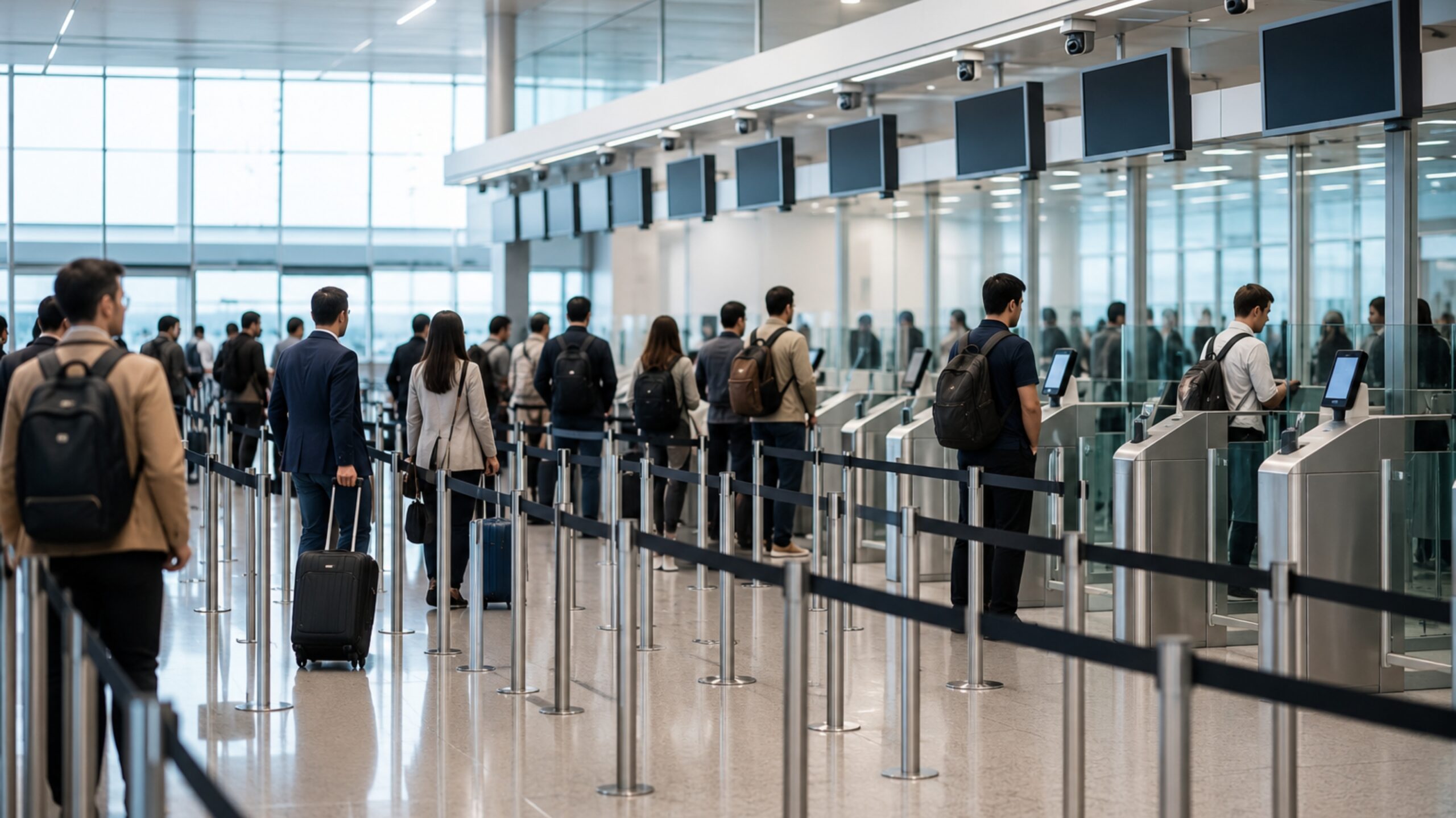
International airports process numerous passengers per year; thus, the operational requirement must be efficient. One of the most complex areas in the airport is the passport control where hundreds of passengers need to be processed rapidly, safely and accurately. This is Why Airport Immigration and Queue Management Matter become essential.
Modern airports are progressively deploying advanced technologies and data-driven approaches in order to enhance the mobility of users, mitigate waiting times, and augment the travelling experience.
Why Airport Immigration and Queue Management Matter
Passport control is a mandatory check for international travel. Passenger congestion is caused by delayed immigration process in case of both arrivals and departures ultimately leading to missed connections and unhappy customers.
Managing immigration queues is more complex, as airports must manage many categories of passengers:
- People who live there.
- International tourists.
- Personnel of flight crew.
- VIP travelers and diplomats.
- Transferring owners.
- Interchanging performers.
Airports will find it difficult to manage passenger flow during peak hours without a proper Airport Immigration and Queue Management strategy.
Main Issues in Immigration Processing
Airports face a number of operational issues related to the passport control area.
1. A high volume of passengers
As international travel is on the rise, immigration facilities are facing pressure causing long queues.
2. Poor visibility of queue conditions
For airport operators it is often difficult to monitor the passenger movement in real-time across immigration lanes.
3. Performance metrics are measured
It is necessary to track waiting times, queue lengths, processing speeds and passenger throughput but can be difficult without automation.
4. Involvement of stakeholders in coordination
To make effective decisions, accurate operational data is necessary for immigration authorities, airport operators, security teams and airlines.
5. Gathering data manually
Traditional monitoring of passenger flow requires a lot of effort and time.
These challenges accentuate the increasing requirement for Airport Immigration and Queue Management solutions.
Why Airport Immigration and Queue Management Matter
Intelligent Answers for Contemporary Airports
Airports are utilizing innovative technologies for real-time visibility and control to streamline operations and enhance passenger experience.
Automated queue detection canopy
At immigration checkpoints, queue lengths and passenger density detection are automatic as done by systems.
Notable results
- Keeping an Eye on Queues in Real Time
- Speedier reaction to overcrowding.
- The immigration counters will be allocated dynamically.
- Passenger distribution got better.
Passenger Segmentation with Intelligence
At present, systems can segregate and manage different passenger categories; here, resources are allocated based on bipartite demand.
Live Performance Analysis
Airport operators can view live dashboards showing:
- Line sizes.
- Standard Queue Duration.
- The speed of processing.
- Aircraft movement.
- Key Performance Indicators.
This data helps in making decisions faster and process continuously improve.
Automated Kiosks and E-Gates
The manual touch of the passport is getting reduced by self-service Kiosks and biometric e-gates to speed up the verification process of the passport.
Major benefits consist of
- Speedier handling of travelers.
- Less operational workload.
- Enhanced security check-up.
- Improved convenience for travellers.
From Start to Finish Gestalt
An airport immigration and queue management system gives a complete overview of the immigration activities. It helps to optimize the staffing levels and passenger flow.
Advantages of Immigration Management and Queue Management at Airport
By using an intelligent immigration management system, benefits could arise for airports and travelers.
Waiting Times Drastically Decreased
Shortening the time passengers need to pass through immigration checkpoints will make them happier, which will reduce their stress when travelling.
Improved Structure Designing
Knowing more about how passengers move in an airport can help planners design areas that best handle queues and immigration facilities.
Increased Operational Efficiency
The ability to monitor operations in real-time gives airport managers the opportunity to manage resources and allocate them in places where they are required most, resulting in increased efficiency.
Enhanced Coordination With Stakeholders
Effective operational data can help in improving cooperation between airport authorities, immigration departments, and the airlines that operate from the airport.
Commercial Gain Through Increased Revenue
Passengers get more opportunities to visit the commercial units inside the terminal when there is reduced queue time.
Why Airport Immigration and Queue Management Matter
The Future of Immigration Management at Airports
It is expected that technological advancements, including artificial intelligence, biometrics, predictive analysis, and passenger flow monitoring will become increasingly significant in shaping the future of Why Airport Immigration and Queue Management Matter
By incorporating some of these innovations in managing passenger flows at airports, organizations will be better prepared to manage passenger flow in a secure and efficient manner.
Conclusion
Managing passenger flow effectively is no longer optional; rather, it is critical for any airport looking to increase performance and ensure security. By employing advanced technologies such as automation, predictive analysis, biometric technology, and proper infrastructural planning, airports can effectively manage passenger flow.
For more contact us :https://dozreich.com/