Choosing the Best Cleanroom Consultant in India for Your Facility
Selecting the appropriate cleanroom consultant in India becomes the most crucial task for setting up the cleanroom for companies involved in pharmaceuticals, biotech, medical device, electronics, semiconductors, healthcare, food processing, or any other sensitive industry. The ideal cleanroom is more than just a room with air filters. The cleanroom is an engineered environment where all the aspects like air flow, pressure, temperature, humidity, material used, movement of personnel, and equipment placement function together.
The role of a professional cleanroom consultant in India lies in helping companies develop the actual design of the cleanroom from the company’s needs and requirements. ISO 14644-4 deals with the development of cleanroom from requirement to design.
Why You Need a Cleanroom Consultant in India
A cleanroom designed by individuals who lack expertise in engineering may incur high costs in construction, inefficient HVAC systems, airflow problems, contamination threats, and problems during qualification and regulatory inspections. The cleanroom consultant in India will analyze the entire project before developing the design.
The consultant needs to know your manufacturing processes, the desired level of cleanliness, equipment, traffic patterns, material flow, utilities, and expansion plans. This information is necessary in determining the kind of classification, zoning, HVAC design, pressure cascade, filtration system, and materials of construction.
ISO 14644-1 gives a structure for air cleanliness classification based on airborne particles, which means that particle control is critical in the design of a cleanroom.
What Should You Look for in a Cleanroom Consultant?
Before choosing a cleanroom consultant in India, there are certain technical and project-specific factors that need to be considered.
1. Industry-Specific Expertise
Requirements for a pharmaceutical cleanroom are very different from an electronics or medical device manufacturing cleanroom. A good cleanroom consultant in India will have the required knowledge regarding the contamination control measures for your specific industry.
The design of the pharmaceutical facility must consider the GMP requirements, controlled personnel and materials flow, pressure differentials, cleaning requirements and environmental monitoring. For electronics and semiconductors industries, it is the particle and chemical contamination.
2. Cleanroom Standards
A professional cleanroom consultant in India will know the requirements and guidelines to design and build the cleanroom. Designing based on the generic construction is not enough. One of the important standards for cleanrooms is the ISO 14644.
ISO 14644 is about classification of cleanroom and the related controlled environment. The standard has many parts. Part 4 is the requirement, design, construction, startup, verification and life cycle.
Depending on the industry, other requirements may be applicable such as GMP requirements and regulations in India. The appropriate requirements must be known before starting the design phase, and not when constructing the facility.
3. User Requirement Specification (URS)
A professional cleanroom consultant in India must start the design process from developing URS. URS is used to define the required characteristics of the facility.
User requirement specification will include the following information:
- Required cleanroom classification
- Production process
- Room sizes
- Number and type of personnel
- Equipment size and heat loads
- Material flow
- Personnel flow
- Temperature requirements
- Relative humidity requirements
- Pressure differentials
- Airflow requirements
- HVAC requirements
- Utility requirements
- Cleaning and maintenance requirements
- Future expansion requirements
URS sets the basis for further steps in the cleanroom project.
Key Elements Required in Cleanroom Design
While selecting the cleanroom consultant in India, all the considerations should be made not just about the room but about the entire facility.
HVAC System
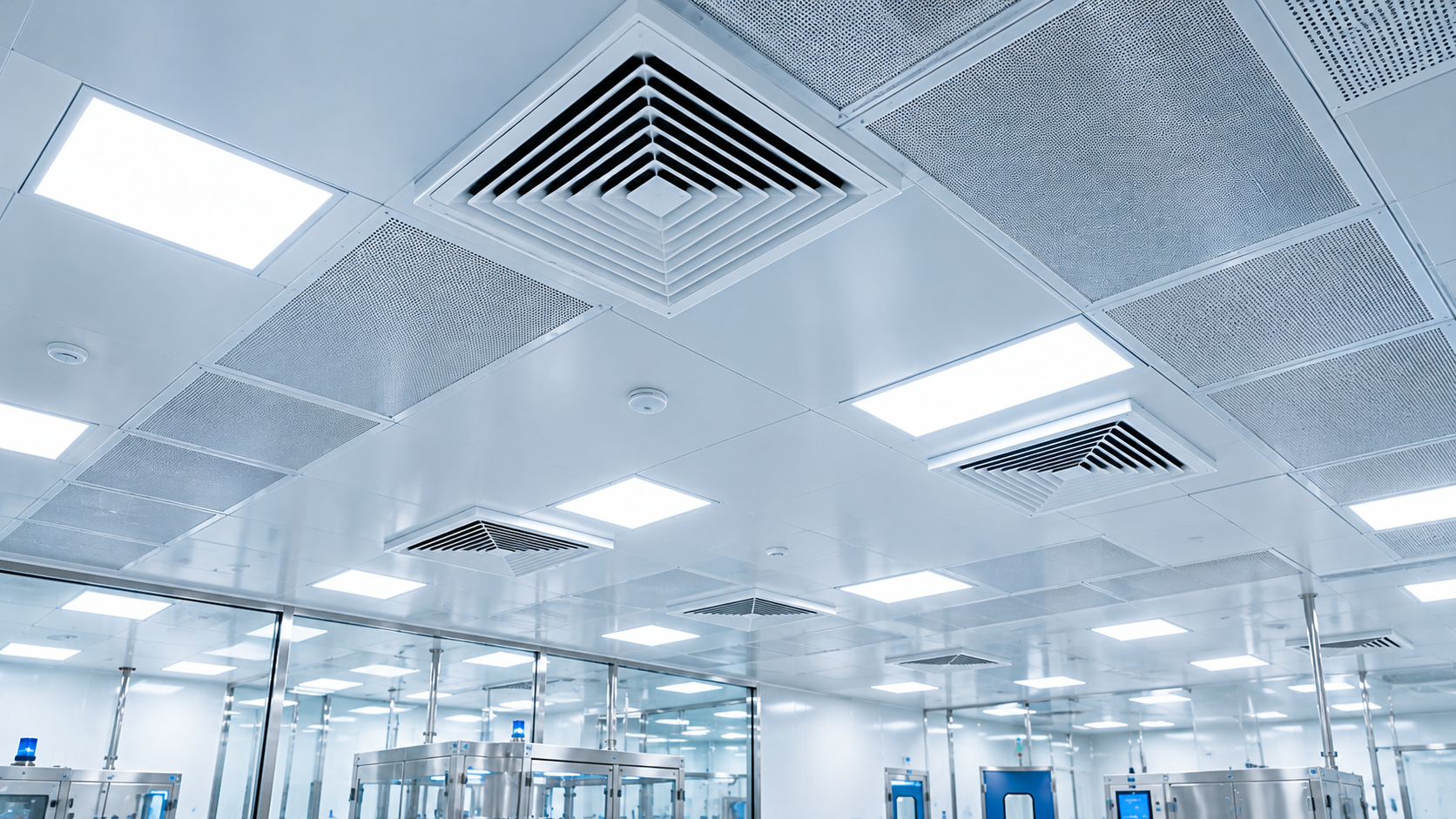
HVAC system is one of the most important elements in cleanroom engineering. It is responsible for ensuring the required temperature, humidity, pressure, airflow, and filtration.
There could be many options included in the design like AHUs, HEPA filters, return air systems, fresh air systems, ducts, control and instrumentation, etc. One more thing that should be considered is energy efficiency as the HVAC system could cost quite significantly. There are recommendations in the ISO 14644-16 document about optimizing energy use while ensuring the required performance.
Airflow and Pressure Control
Airflow and pressure should be designed according to the process and contamination control strategy. It is important for the cleanroom consultant in India to identify how air enters, travels around, and exits each controlled area.
It could be useful to have pressure differentials between the rooms to control contamination migration. There could be included airlocks, pass boxes, personnel airlocks, and material airlocks depending on the facilities’ requirements.
Cleanroom Classification
The required classification should be defined before the engineering process. ISO 14644-1 provides classifications of air cleanliness according to the airborne particle concentration.
It is important for the cleanroom consultant in India to select the right classification for the process rather than selecting the highest possible. The over-specification could lead to extra capital and operating expenses.
Cleanroom Construction Materials
Walls, ceilings, floors, doors, windows, coving, and all other surfaces should be selected depending on cleanliness, durability, cleanability, and process compatibility.
Smooth and easy-to-clean surfaces are usually desirable due to the contamination control concerns associated with uncontrolled joints, gaps, and difficult-to-clean areas.
The newest ISO 14644-13:2026 document provides guidance related to reaching the defined level of cleanliness by using appropriate cleaning practices.
Personnel and Material Flow
The best cleanroom consultant in India should make sure that there is a separation of personnel and material flows whenever needed. The goal is to reduce unnecessary movements and contamination risks.
The layout could include:
- Personnel entry area
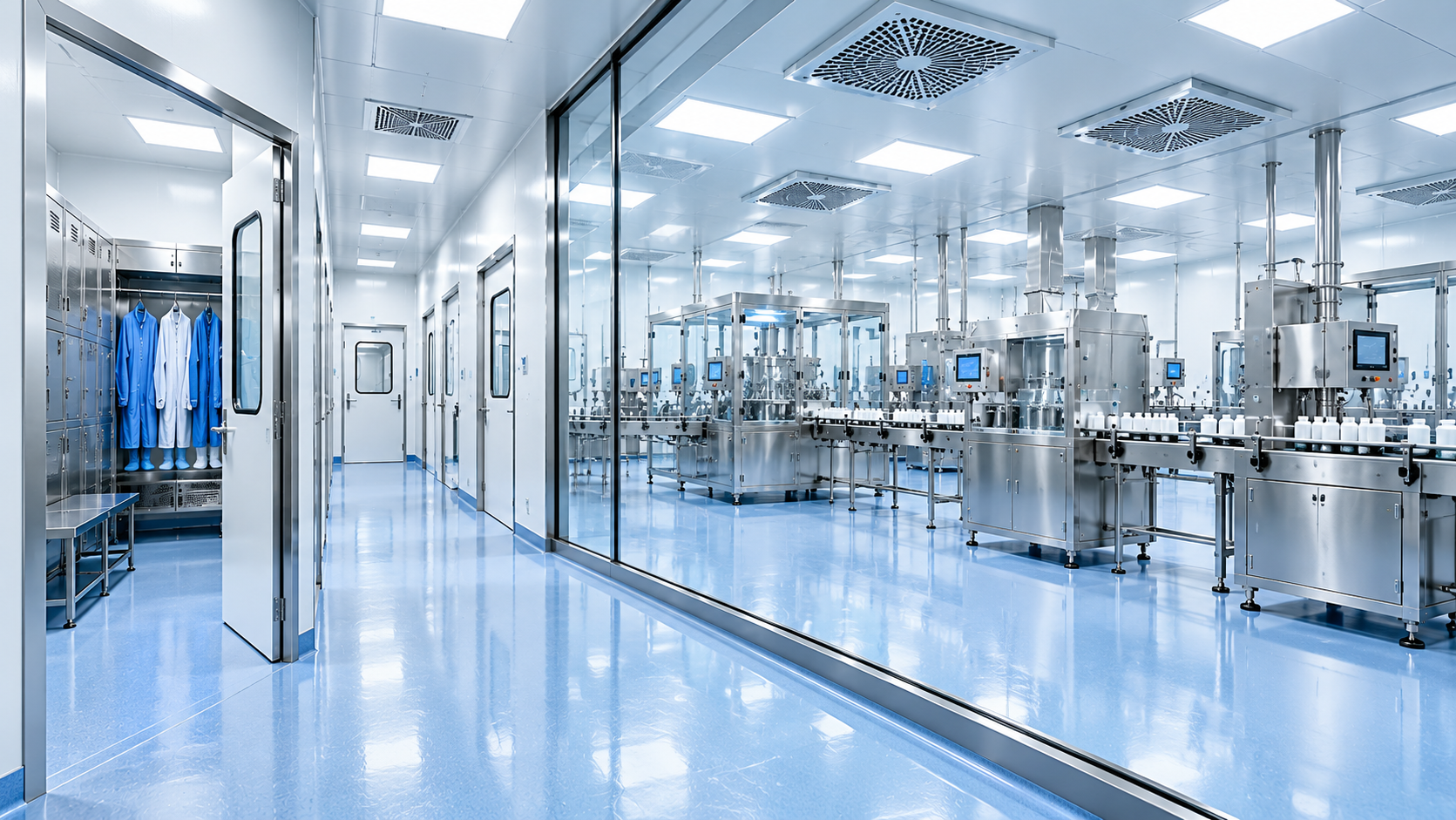
- Gowning rooms
- Personnel airlocks
- Material airlocks
- Pass boxes
- Production rooms
- Sampling areas
- Storage areas
- Change rooms
- Waste movement area
It should be designed before the construction starts.
Electrical and Utility Requirements
Design of cleanroom is also dependent on integrated electrical and utility design. Depending on the facility, the needs could range from electrical distribution, emergency power, lighting, process gases, compressed air, pure water, chilled water, drainage, fire protection, and monitoring systems.
The consultant for cleanrooms in India needs to integrate all these utilities within the architectural and HVAC design so that these utilities do not hinder cleanroom performance.
Qualification and Validation
Qualification and verification are also an integral part of creating an effective cleanroom. A cleanroom consultant from India will be able to develop an approach for testing and documenting this process. It may involve such procedures as design qualification, installation inspection, operational testing, performance verification, air-flow testing, HEPA filter integrity testing, particle counting test, temperature and humidity verification, and pressure differential testing.
According to ISO 14644-4, start-up and verification is an integral part of cleanroom creation.
Energy Efficiency and Lifecycle Costs
The most inexpensive cleanroom to build is not always the most cost-effective cleanroom to run. A good cleanroom consultant in India would consider the life-cycle cost of the project.
HVAC sizing, air-change rates, filters, heat loads, equipment choices, controls, insulation, and the operating schedule can impact the amount of energy consumed over time.
Energy efficiency should therefore be thought about during the initial design stage rather than afterwards.
How Dozx Can Help?
Dozx offers cleanroom-related engineering and turnkey services, which are engineered to suit the needs of the particular industrial and cleanroom applications. In selecting a cleanroom consultant in India, one should consider whether an integrated approach is taken into account when considering design, engineering, construction needs, HVAC, utility considerations, contamination control, and project implementation.
One might choose Dozx if an integrated approach is needed, in order to take clients from their project needs to a realistic cleanroom solution.
This will be dependent upon the industry, cleanroom classification, facility size, process needs, and regulations involved.
Questions to Ask Before Choosing a Cleanroom Consultant
Before hiring a cleanroom consultant in India, inquire:
- Which cleanroom classes are within your capacity to design?
- Do you have an understanding of the standards that apply in my industry?
- Are you able to formulate URS and design documentation?
- What will be the separation of personnel and material flow like?
- What will be the design of HVAC and pressure differential?
- What kinds of materials will be proposed for the walls, floors, and ceilings?
- What will be the consideration of energy efficiency?
- What will be the support for qualification and verification?
- Will the design allow for future expansions?
- How will the engineering systems be coordinated?
These are some of the questions that can assist firms in distinguishing between a general contractor and a specialist cleanroom consultant in India.
Conclusion
Choosing the right cleanroom consultant in India will help you design a system that will work effectively all through its lifetime. Such a project involves more than simply installing HEPA filters and building enclosed rooms. It involves planning of HVAC, airflow, pressure, classification, construction material, people traffic, material traffic, utilities, monitoring, qualification, and maintenance.
The right cleanroom consultant in India will need to possess the above knowledge and skills together with the knowledge of standards and engineering coordination. Companies will need to identify their needs, decide on their classification and develop a comprehensive URS before engaging in the construction.
Through a properly coordinated engineering process and proper technical expertise, companies can be able to design a system that works effectively in the area of contamination control while at the same time ensuring productivity and safety.