Difference Between Aseptic and Sterile
In terms of drug manufacture, Aseptic vs Sterile is the term that is widely applied. Nevertheless, it implies two distinct concepts that are necessary to adhere to in order to ensure the maintenance of quality standards and regulatory requirements. That is why it is significant to learn about Aseptic vs Sterile distinctions for drug manufacturers, clean room designers, quality assurance specialists and manufacturers of sterile drugs.
In the present paper, we are going to compare Aseptic vs Sterile, define their meaning, highlight their differences, application, and the significance of Aseptic vs Sterile in drug manufacturing.
What Is Sterile?
Before talking about Aseptic vs Sterile, it is necessary to understand the notion of sterility.
A sterile product is one where there are absolutely no live microorganisms present in the form of bacteria, fungi, viruses, or even spores of bacteria. The sterility is ensured through validation of sterilization methods such as steam sterilization, dry heat sterilization, ethylene oxide sterilization, irradiation, and filtration. This is product specific.
product specific.
This requirement applies to:
- Injections
- Ophthalmic solutions
- Surgical instruments
- Implants
- Sterile medical devices
The regulatory authorities need manufacturers to validate and monitor the sterilization procedures.
What Does Aseptic Mean?
Now we will continue our discussion by defining the meaning of aseptic.
Aseptic consists of all operations and processes that provide an absence of contamination from any microorganisms during the manufacturing, filling, and packaging of the products. Asepsis, compared to sterilization where microorganisms are destroyed, prevents any entry of microorganisms into the sterile product.
Aseptic area includes the following:
- ISO class clean rooms
- Air filtration by means of HEPA filters
- People movement control
- Sterile clothing
- Sterile equipment
- Environmental control.
Aseptic processing ensures sterility of the sterile product
Aseptic vs Sterile: Key Differences
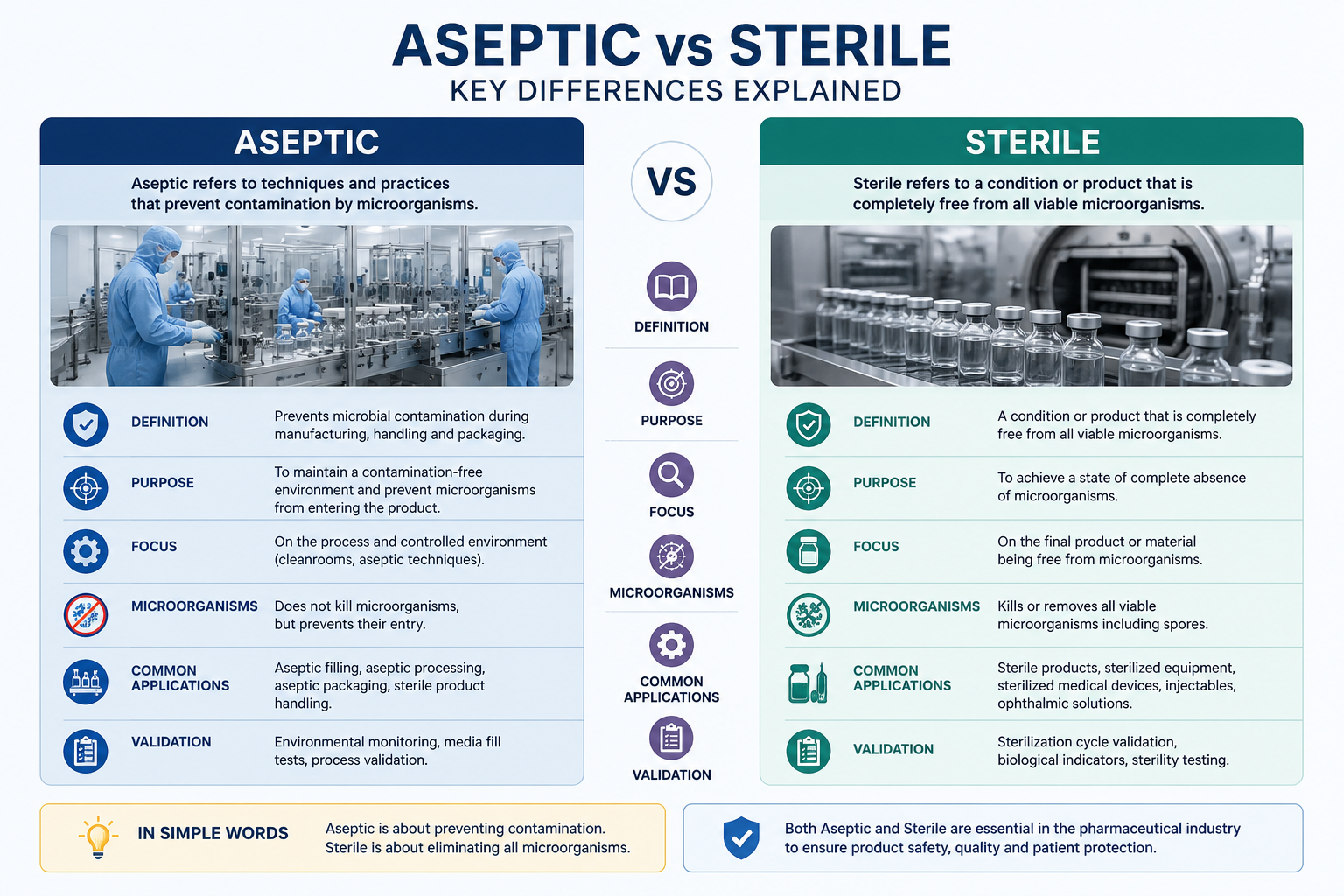
Understanding Aseptic vs Sterile becomes easier by comparing their core characteristics.
| Feature | Aseptic | Sterile |
|---|---|---|
| Definition | Prevents microbial contamination | Completely free of microorganisms |
| Purpose | Maintain sterility | Achieve sterility |
| Focus | Controlled manufacturing process | Final product condition |
| Microorganisms | Prevents entry | Eliminates all viable microorganisms |
| Common Application | Filling, packaging, handling | Medical devices, injectable drugs, equipment |
| Validation | Environmental monitoring and process control | Sterilization validation and sterility testing |
This comparison highlights that Aseptic vs Sterile is not a competition—both work together to ensure pharmaceutical safety.
Why Aseptic Processing Is Important
But in some cases in the production of pharmaceutical products, the products are not able to withstand heat or any other type of sterilization. In such cases, the product is sterilized by filtration before transferring it to aseptic fill lines.
This is where the difference between Aseptic vs Sterile becomes important. The product may be sterile but because of non-adherence to aseptic conditions in packaging, the products might get contaminated. Hence, aseptic processing guarantees that the sterile products will remain uncontaminated after sterilization.
Why Sterility Matters
The concept of Aseptic vs Sterile is also significant in the context of sterility.
In case if an injectable medicine is not sterile, it can cause infection of blood by dangerous microorganisms leading to various infections. It is required from the regulatory authorities to ensure that sterility can be guaranteed by appropriate sterilization procedures, biological and sterility testing.
Therefore, sterility is one of the parameters of the pharmaceutical product.
Applications in the Pharmaceutical Industry
The importance of Aseptic vs. Sterile is clear from various applications of drugs.
Some of these are:
- Vaccine production
- Injectable drug manufacturing
- Biopharmaceutical drug manufacturing
- Aseptic filling
- IV solution manufacture
- Ophthalmic solution manufacturing
- Cell and gene therapy drug manufacturing
- Cleanroom technology
All these processes involve use of aseptic technique and sterile products.
Regulatory Standards
In pharmaceutical regulations all over the world, there is need for the use of sterile manufacturing as well as aseptic processing.
These include the following:
- ISO 14644 – Cleanroom Standards
- EU GMP Annex 1
- WHO Good Manufacturing Practices (GMP)
- US FDA Current Good Manufacturing Practice (CGMP)
The aforementioned regulations require adherence to such matters as cleanroom classification, environment monitoring, qualification of personnel, contamination control and validation.
Best Practices for Maintaining Aseptic and Sterile Conditions
Pharmaceutical production is carried out effectively by incorporating sterile products and aseptic processes.
Some of the recommended best practices include:
- Validation of sterilization cycles.
- ISO cleanroom maintenance.
- Environmental monitoring.
- Training of employees on aseptic processes.
- HEPA filtered air flow systems.
- Gowning process.
- Qualification of equipment.
Conclusion
Knowledge of Aseptic and Sterile is fundamental in the pharmaceutical industry and during cleanroom procedures. Although sterility is used to refer to the absence of any microorganism, aseptic is used to refer to the procedure by which contamination is avoided in the manufacture of pharmaceutical products.
The two terms, Aseptic and Sterile do not substitute for one another but go hand in hand to guarantee the safety of pharmaceutical products and the health of patients. Sterility refers to ensuring that the product is free from any microorganism while aseptic processes would help maintain sterility.
To have compliance to global standards, pharmaceutical firms must necessarily incorporate high-quality cleanrooms, sterilizers and contamination control systems. If this is done alongside an efficient aseptic process, then pharmaceutical firms would be able to manufacture quality sterile products.
For more information visit :https://dozreich.com/
Follow for more:https://www.linkedin.com/company/dozreich/