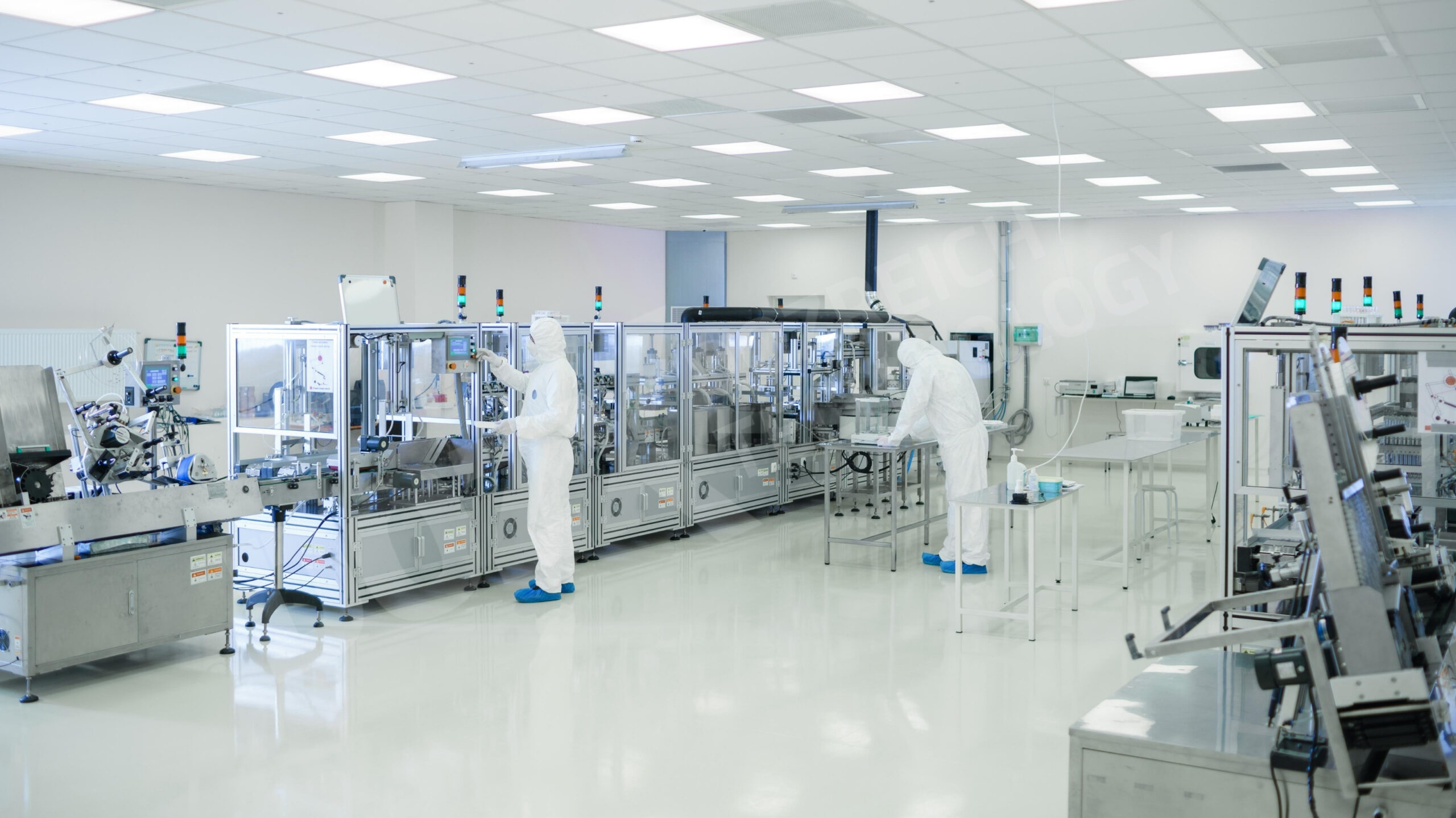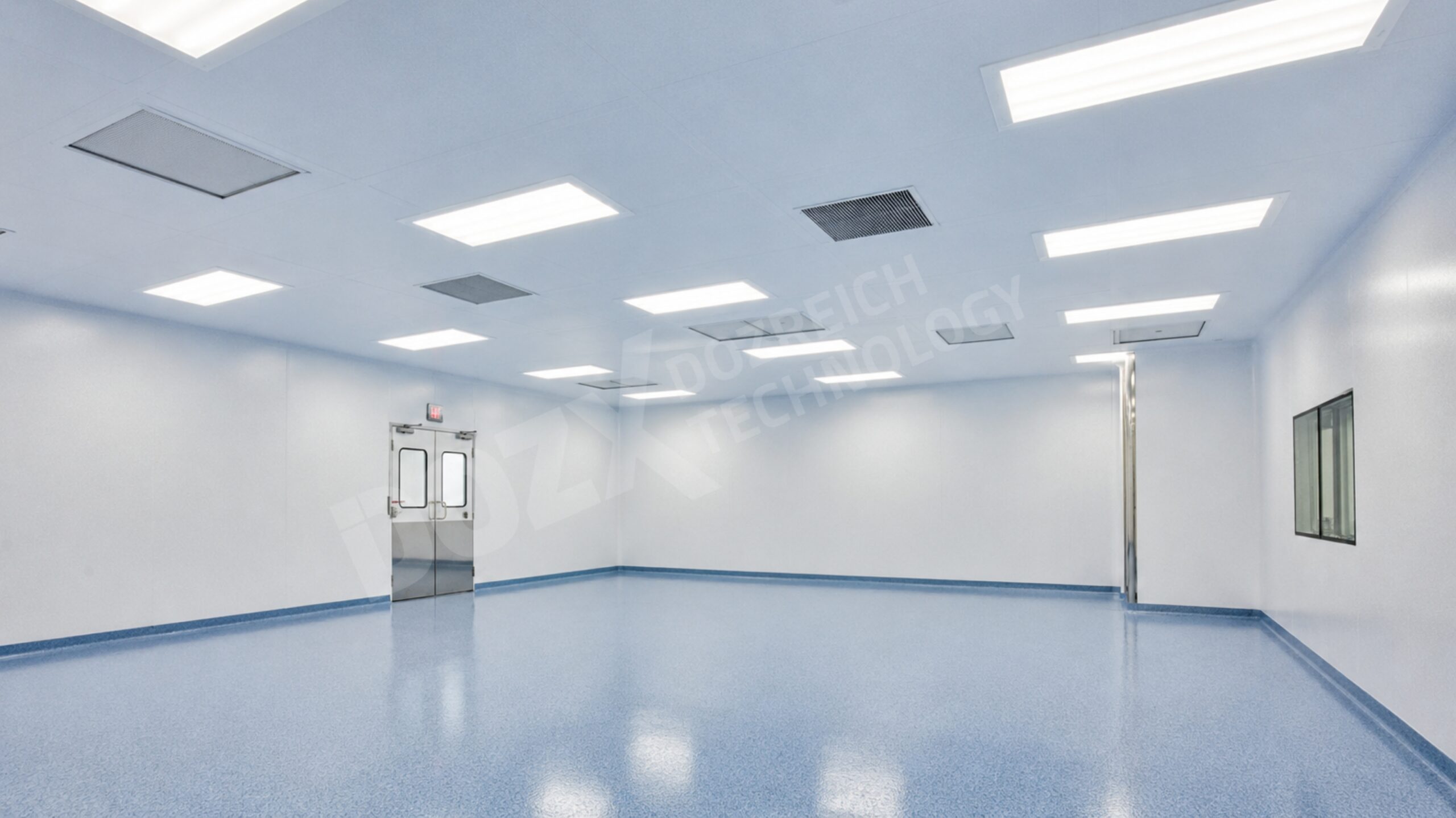
What Is Cleanroom HVAC Design?
Cleanroom HVAC design can be defined as an engineering process aimed at creating a system of heating, ventilation, and air conditioning specially designed for clean environments. The thing that distinguishes cleanroom HVAC system from the traditional commercial HVAC system is the set of criteria that have to be met concerning air cleanness and environmental controls.
The basic goal of cleanroom HVAC design is the provision of filtered air to the controlled environment along with its purification and keeping the required environmental parameters.
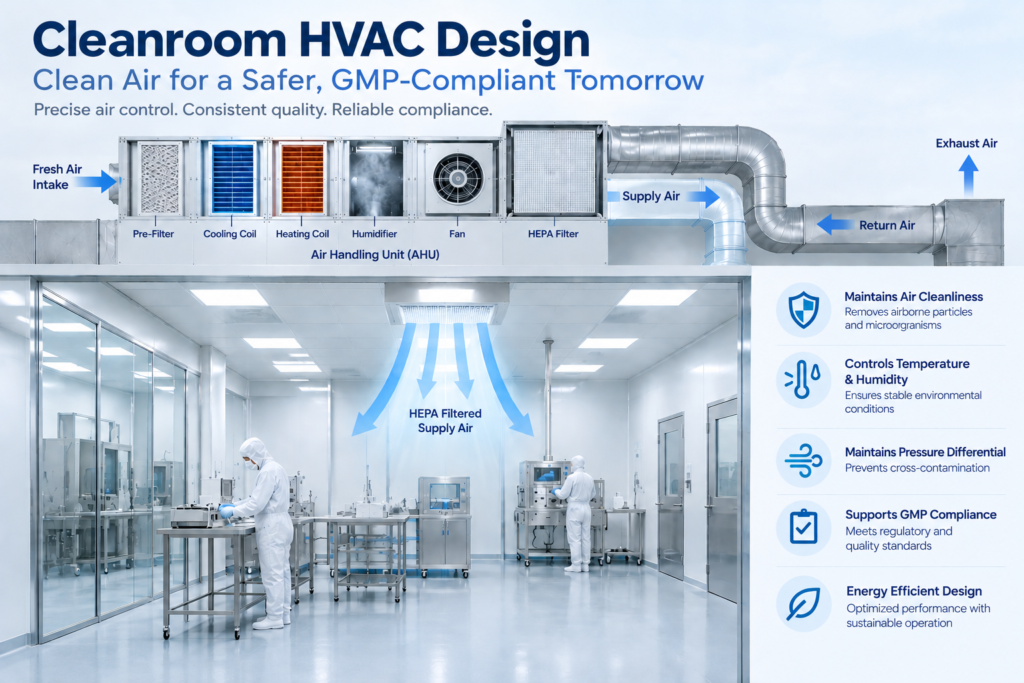
The cleanroom HVAC system usually consists of the following elements:
- Air-handling units
- HEPA filters
- Pre-filters and fine filters
- Supply/return air system
- Air ducts
- Cooling and heating coils
- Humidity control system
- Pressure control system
- Airflow control system
- Temperature and humidity sensors
Each element works as an integral part of a cleanroom HVAC system.
The Importance of Cleanroom HVAC Design in GMP
GMP requirements are meant to ensure that pharmaceuticals and other regulated products are manufactured and controlled based on specific quality standards. The environment can have an influence on the quality of such products, especially when products are subject to the manufacturing environment.
Cleanroom HVAC design is therefore very important in GMP facility planning.
A well-designed HVAC system will help in controlling:
- Particles in the air
- Microbial contamination
- Cross contamination
- Temperature
- Relative humidity
- Pressure in the room
- Airflow
- Number of air changes
Inadequate cleanroom HVAC design will lead to uncontrolled airflow and pressure differentials, which may increase contamination and affect the performance of the cleanroom.
Control of Airflows in Cleanrooms
One of the main aspects in designing HVAC for cleanrooms is the air flow. Cleanrooms require controlled air flows in order to avoid contaminant accumulation or transfer within various zones.
The airflow can be unidirectional or non-unidirectional depending on particular application of the cleanroom.
Unidirectional air flows involve a continuous stream of filtered air in a predetermined direction through the critical working zone. The design is usually applied where a very high degree of contamination control is needed.
Non-unidirectional air flow is characterized by filtered air distribution through the room for dilution and removal of contaminants.
The proper choice of the airflow design is determined by the process involved, the classification of the room, arrangement of the equipment, personnel movements and the risk of contamination. For this reason, the design of HVAC for cleanrooms must be always process-specific.
Pressure Differential and Contamination Control
Another key element of cleanroom HVAC systems is pressure differentials.
It is common practice to have cleanrooms arranged as pressure cascades where air flow direction would go from cleanest spaces to less clean spaces. The right pressure differential is needed to ensure that contaminated air will not enter high-grade clean zones.
In one case, a cleanroom with higher pressure may serve as protection against the entry of air from surroundings when doors are opened.
However, in some cases, it is important to focus on containment rather than filtration. Thus, negative pressure is used in order to keep dangerous substances from spreading into surroundings.
Thus, pressure needs to be specified depending on the process and contamination control method.
An efficient cleanroom HVAC system is able to maintain pressure differentials constant despite door openings or movements of people and equipment.
HEPA Filtration in Cleanroom HVAC Design
HEPA filtering is an essential component of many cleanroom HVAC design systems.
HEPA filters are employed to filter out tiny airborne contaminants from the supply air stream. The efficiency of the filter is crucial since the supply air quality has a direct impact on the degree of room contamination.
HEPA filters can be positioned either at terminal air supply locations or in the air handling systems based on the design of the cleanroom.
Nevertheless, installation of HEPA filters does not ensure proper contamination control alone; the cleanroom HVAC design as a whole must also take into consideration:
- Filter placement
- Air velocity
- Air distribution
- Filter integrity
- Room pressure
- Return air configuration
- Accessibility for maintenance
The integrity and efficiency of the HEPA filters must be checked periodically.
Temperature and Humidity Control
These two factors are very important for the environment of GMP manufacturing plant.
Bad temperature control can influence employee comfort, equipment performance, and also manufacturing process itself. Too much humidity in the air can lead to such phenomena as condensation, microbial growth, and other problems with materials or products.
Thus, cleanroom HVAC system design shall define the proper range of temperature and humidity according to process needs.
Such actions can be performed by:
- cooling;
- heating;
- dehumidification;
- humidification;
- reheating.
It depends on the geographical location, process needs, facility features, and sensitivity of products.
Air Changes and Particle Control
Air changes per hour often come into play during the design of the HVAC system for a cleanroom environment. The system needs to deliver the correct amount of filtered air to ensure that the proper environment is maintained.
But air changes should never be chosen just because it is a common number in the industry.
There are many aspects of the situation that will affect the needed airflow, such as:
- Size of the room
- Classification of the cleanroom
- Number of occupants
- Heat load of equipment
- Particles produced by processes
- Airflow patterns
- Recovery capability requirements
Cleanroom HVAC Design and Cross-Contamination
Cross contamination is an issue that should not be overlooked when dealing with pharmaceutical or other controlled manufacturing operations.
Contaminants in the form of particulates, microbes, powders, vapors, or others can spread through the air into different areas. Therefore, proper air flow direction and pressure levels should be taken into account.
A properly designed HVAC for cleanrooms can separate different production areas using proper zoning and pressure cascades.
If the facility operates under conditions where different products or materials are used, HVAC zoning becomes particularly relevant. Different air conditioning or air recirculation methods can be needed.
GMP Qualification of HVAC Systems
HVAC system design is just the beginning. The system needs to be properly qualified and tested.
GMP-based cleanroom HVAC design needs to enable proper testing of the installed system against pre-defined acceptance criteria.
Common HVAC and cleanroom qualification tasks might be:
Airflow rate test
- Air speed test
- HEPA filter integrity test
- Differential pressure test
- Temperature test
- Relative humidity test
- Particle concentration test
- Airflow visualization test
- Recovery test
All of these tests would help show that cleanroom HVAC system design is performing according to expectations.
Qualification documentation is also necessary, as GMP compliance requires not only proper equipment operation but also documentation proving it.
Energy Efficiency in Cleanroom HVAC Design
Cleanroom HVAC systems have potential high energy consumption as a result of the need for continuous operation, filtration, cooling, heating, and control of the airflow.
A modern design of a cleanroom HVAC system should then incorporate energy efficiency without compromising on contamination control.
Possible ways of doing this may include:
- Use of efficient air handling units
- Variable speed drives where applicable
- Energy-efficient cooling systems
- Effective heat recovery where feasible
- Insulation where required
- Optimal flow rates
- Automation and control
- Zoning
The idea should not only be to minimize airflow or operating hours but rather a way of energy efficiency that fits in with the process.
Common Cleanroom HVAC Design Mistakes
There are several ways through which mistakes will reduce the performance of a cleanroom.
1. HVAC without a Process Perspective
The HVAC design needs to be based on the manufacturing process, contamination, people traffic, equipment, and the class of cleanroom.
2. Bad Pressure Cascade Strategy
Incorrect pressure cascade may lead to unwanted movement of air between different rooms.
3. Airflow Distribution
Proper flow distribution in a cleanroom even if the total airflow volume is adequate will help eliminate dead zones.
4. Poor Maintenance Access
HEPA filter, coils, dampers, sensors, and other items need regular checking and maintenance. Cleanroom HVAC must have access without disturbing control areas.
5. Not Looking at Future Expansion Needs
Expansion needs in the future will require some equipment and production facilities. HVAC capacity and zoning must be planned for right from the beginning.
How to Develop an Effective Cleanroom HVAC Design
The development of a successful HVAC system in a cleanroom calls for teamwork by cleanroom designers, HVAC engineers, process experts, validation personnel, and the operators of the facility.
The procedure starts with the identification of:
- Product specifications
- Manufacturing processes
- Classification of the cleanroom
- Personnel requirements
- Load requirements
- Contamination considerations
- Pressure considerations
- Temperature and humidity considerations
The HVAC engineer is thus able to do airflow calculations, equipment selection, zonation, ductwork, filtration, and control of the system.
The final cleanroom HVAC design should be evaluated according to the GMP guidelines and cleanroom standards.
Conclusion
Cleanroom HVAC design is the key component of GMP compliant facility design. It impacts significantly on the aspects of contamination control, differential pressures, air flow, filtration, temperature and humidity within the cleanroom.
The cleanroom HVAC design that is properly planned needs to be built on the basis of the process, the cleanroom classification and contamination control needs, but not general specifications only. The proper testing, qualification, monitoring and maintenance are crucial in achieving the desired cleanroom performance consistency.
For manufacturing facilities of pharmaceuticals, biotechnology, medical devices and others, professional cleanroom HVAC design can contribute to building a controlled environment for the production according to GMP guidelines.
DOZX Cleanroom Solutions offers cleanroom engineering and HVAC design solutions based on the particular needs of controlled manufacturing facilities. Using a comprehensive approach to cleanroom design, HVAC systems, filtration and contamination control, DOZX helps businesses to build reliable