What Are Cleanroom Pass Boxes?
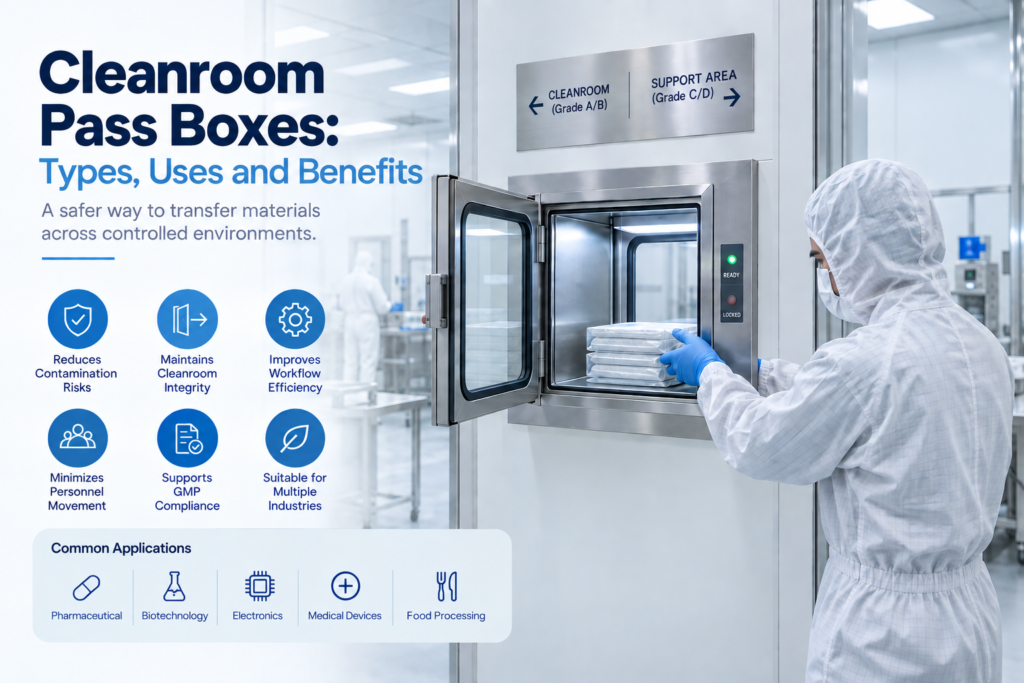
Pass boxes for cleanrooms are special transfer chambers located between two clean zones. The design of pass boxes allows transporting materials from one room to another without significant ventilation of the two adjacent rooms.
A regular pass box features two doors located at opposite ends of the chamber. Usually, such doors are interlocked, meaning that they cannot be opened at once to avoid uncontrolled airflow between the two zones.
Pass boxes can have either a static or dynamic design depending on the intended use of the equipment.
In the case of static design, pass boxes work using only the environmental conditions present outside of the device.
Dynamic pass boxes include a special air filtration and circulation system.
Why Are Cleanroom Pass Boxes Important?
Material transfers may pose a potential source of contamination. The opening of a normal door between two rooms may allow movement of air and other contaminants between rooms.
Cleanroom pass boxes offer an alternative way to make such transfers and thus may prevent the need to open doors between cleanrooms.
They may:
- Help to minimize the number of people entering rooms unnecessarily
- Prevent uncontrolled exchange of air
- Facilitate room zoning
- Lower contamination risks
- Help to improve material transfer efficiency
- Keep different areas separated
- Favor controlled manufacturing process
The specific needs for cleanroom pass boxes may vary depending on a number of factors.
Types of Cleanroom Pass Boxes
Several configurations exist regarding pass boxes in cleanrooms, and choosing the right type depends on the intended purpose.
1. Static Pass Box
Static pass boxes are used in cases where transfer of materials occurs without the need for extra air filtration in the unit.
These pass boxes usually have two interlocked doors and a chamber with smooth internal walls which make it easy to clean.
2. Dynamic Pass Box
Dynamic pass boxes usually contain internal air circulation and filtration systems.
Air is circulated through the filtration system in order to reduce airborne particles in the transfer chamber. These pass boxes might be preferred in situations requiring high levels of environmental control.
Dynamic cleanroom pass boxes are particularly helpful in transferring materials from areas with different cleanliness levels.
3. Pass Box with UV Light
Pass boxes might contain ultraviolet light. Ultraviolet light is an optional feature depending on the specifications of the facility; however, UV should not be used as an alternative to cleaning, disinfecting, filtering, or validation of contamination control methods.
4. Pass Box with Floor Mounting
This kind of installation may be required where bulky or heavy materials need to be transferred.
Such arrangements can offer a bigger interior transfer space while still having a controlled isolation of adjacent areas.
5. Pass Box for Material Transfer
Pass boxes with material transfer designs are made taking into consideration the size and nature of materials to be transferred.
Interior dimensions of such arrangements should be decided based on the biggest materials to be transferred through the chamber.
Key Features of Cleanroom Pass Boxes
Pass Boxes should be designed with consideration of contamination prevention and ease of use.
Common elements in pass boxes include:
Door Interlocks
Door interlocks is one of the most vital elements. It ensures that two doors are not open at once, thus ensuring separation between the two spaces that are connected.
Smooth Surfaces
The surfaces should be smooth, durable, and cleanable. Crevices and hard-to-clean surfaces make sanitation harder.
HEPA Filtration
Dynamic systems may include HEPA filters to ensure that there is an air flow through the chamber.
Differential Pressure
Pressure relationship may be included in the design depending on the application, in order to enhance contamination control process.
Door Indicators
There are door indicator systems that show whether the door is locked or unlocked.
Stainless Steel Construction
Construction is usually done using stainless steel due to its durability and cleanability.
How Do Cleanroom Pass Boxes Work?
The process of operation in cleanroom pass boxes is rather straightforward.
First, the operator opens the door on the side where the material originates and places the material inside the pass box. The door is subsequently closed.
The lockout feature ensures that the other door cannot be opened simultaneously.
Depending on the specific unit, the pass box can subsequently go through a certain cycle of material transfer or cleansing. In a dynamic clean room, filtered air can circulate in the pass box.
Once the cycle or transfer is complete, the other door can be opened, and the material removed from the chamber.
The exact process should be determined depending on the contamination control requirements of the facility.
Applications of Cleanroom Pass Boxes
Pass boxes are used in a number of different industries where control over material transfer is essential.
Pharmaceutical Manufacturing
Pharmaceutical plants employ pass boxes to transfer raw materials, packaging components, tools, samples, and many other materials between controlled environments.
Biotechnology
Biotechnology labs and manufacturing facilities may utilize pass boxes to facilitate the controlled transfer of materials, limiting unnecessary personnel movement.
Medical Device Manufacturing
The manufacture of medical devices may necessitate controlled environments during certain stages of production to limit contamination risks.
Electronics and Semiconductor Manufacturing
Electronic devices may be affected by airborne particles. Pass boxes may aid in the controlled transfer between clean manufacturing environments.
Healthcare and Laboratories
Labs and healthcare related facilities may use pass boxes to transfer equipment, samples, and other materials between controlled environments.
Benefits of Cleanroom Pass Boxes
Some of the benefits of proper pass boxes within cleanrooms include:
1. Enhanced Contamination Control
Cleanroom pass boxes may help restrict uncontrolled movement of air and possible contamination between two areas in a cleanroom by limiting door openings between rooms.
2. Restriction of Unnecessary Movement
Operatives do not have to go into another cleanroom just to move materials from one area to another.
3. Proper Zoning within Cleanroom
Pass boxes can help segregate cleanrooms based on their different environmental needs.
4. Improved Workflow
If positioned strategically, pass boxes will allow quick and efficient transfer of materials from one area to another.
5. Ease of Material Transfer
Material transfer is done through a specialized chamber rather than through direct access between two rooms.
6. Support for Good Manufacturing Practice (GMP)
Properly designed, installed, used, and maintained cleanroom pass boxes can support the contamination control strategy in GMP regulated cleanrooms.
Nonetheless, a pass box alone cannot be guaranteed to be in accordance with the GMP regulation. It should be part of the contamination control and quality system of the facility.
Choosing the Right Cleanroom Pass Box
When choosing a cleanroom pass box, a number of factors have to be taken into account.
Firstly, the size and type of material to be conveyed should be considered. The interior dimensions should allow for the passage of the material being moved without undue space restrictions.
Secondly, the classification of cleanliness of the rooms separated by the pass box should be evaluated. Depending on whether the material will be transported between rooms having similar or dissimilar cleanliness classes, the configuration can vary.
Other considerations include:
- Static or dynamic configuration
- HEPA filtration
- Interlocked door systems
- Material used
- Interior dimensions
- Pressure requirements
- Cleaning requirements
- Monitoring requirements
- Location of installation
- Accessibility of maintenance
In the end, the pass box should be incorporated into the overall design of the cleanroom.
Maintenance of Cleanroom Pass Boxes
Maintenance is necessary for proper operation of cleanroom pass boxes.
It is important to establish cleaning protocols and inspect the interior surface for wear and tear regularly.
In the case of dynamic pass boxes, it is important to maintain filters, fans, control devices, etc., according to the manufacturer’s recommendations and the maintenance program.
The door interlocks must be regularly tested for proper functioning.
All maintenance activities that may influence the performance of the cleanroom should be documented and assessed according to the quality process of the facility.
Common Mistakes to Avoid
One frequent error is the choice of a pass box depending only on the cost and dimensions.
Poor positioning of the pass box, not taking into account traffic of people and materials, is another typical error which causes unnecessary movement and decreased efficiency of work processes.
It is also important not to neglect the interlocks of doors that ensure the isolation of the rooms.
The last frequent mistake is the misuse of the pass boxes in order to substitute other contamination control practices in the cleanrooms.
Conclusion
Cleanroom pass boxes are one of the key elements in material transfer systems. The equipment offers a convenient option for transferring materials within cleanrooms and surrounding areas and can help minimize unnecessary door opening, personnel movements, and unwanted airflow.
The selection of appropriate cleanroom pass boxes should be made based on the cleanroom classification of the facility, material transfer needs, contamination risks, pressure approach, and processes in place. Static or dynamic models offer various levels of environmental control, while options such as interlocked doors, HEPA filters, stainless steel, and monitoring system can be chosen according to the application.
A proper design of cleanroom pass boxes can be useful for efficient contamination control for pharmaceuticals, biotechnology, medical devices, electronics, and other manufacturing industries.
DOZX Cleanroom Solutions offers engineering services and controlled environment solutions tailored to industry-specific needs. Whether it is cleanroom design, HVAC, material transfer systems, or other related services, DOZX will help companies to create their own controlled environment.