Cleanroom Standards for Semiconductor, Battery, and Solar Manufacturing Facilities
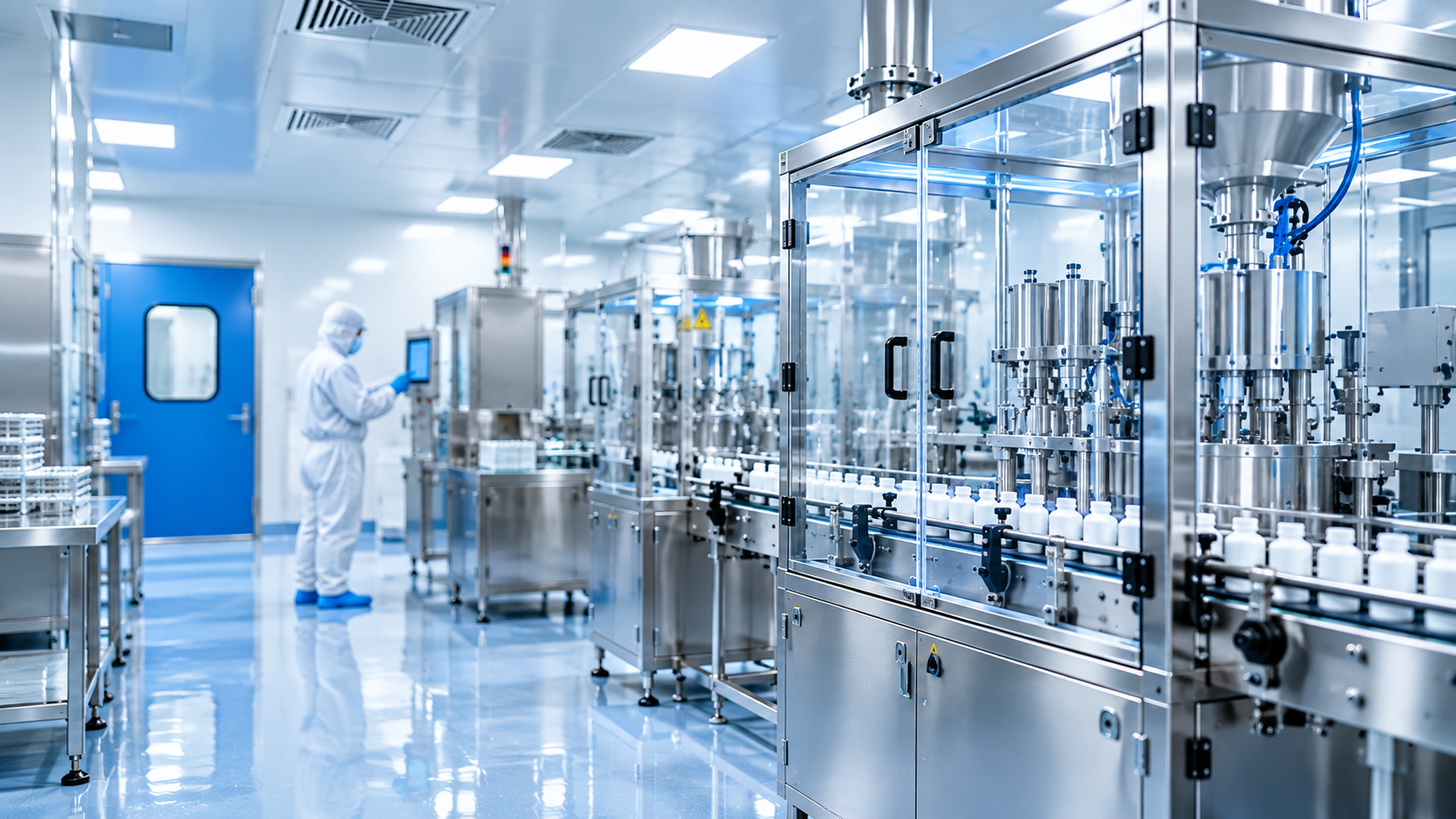
Cleanroom Standards for Semiconductor, Battery, and Solar Manufacturing Facilities.As industries continue to advance toward higher precision, efficiency, and automation, maintaining contamination-free manufacturing environments has become increasingly critical. Semiconductor fabrication plants, lithium-ion battery gigafactories, and solar panel manufacturing facilities all rely on cleanrooms to ensure product quality, process reliability, and operational consistency.
Cleanroom standards define the environmental conditions required to control airborne particles, temperature, humidity, pressure, and electrostatic discharge (ESD). These standards help manufacturers achieve optimal production performance while meeting industry-specific quality requirements.
What Are Cleanroom Standards?
Cleanroom standards are guidelines that specify the acceptable levels of airborne particles and environmental controls within a manufacturing area. The most widely recognized standard is ISO 14644, which classifies cleanrooms based on the concentration of airborne particles per cubic meter of air.
The lower the ISO class number, the cleaner the environment.
Cleanroom standards typically regulate:
* Airborne particle concentration
* Temperature control
* Relative humidity levels
* Airflow patterns
* Pressure differentials
* Electrostatic discharge (ESD) protection
* Environmental monitoring requirements
These controls are essential for industries where microscopic contamination can affect product performance and manufacturing yield.
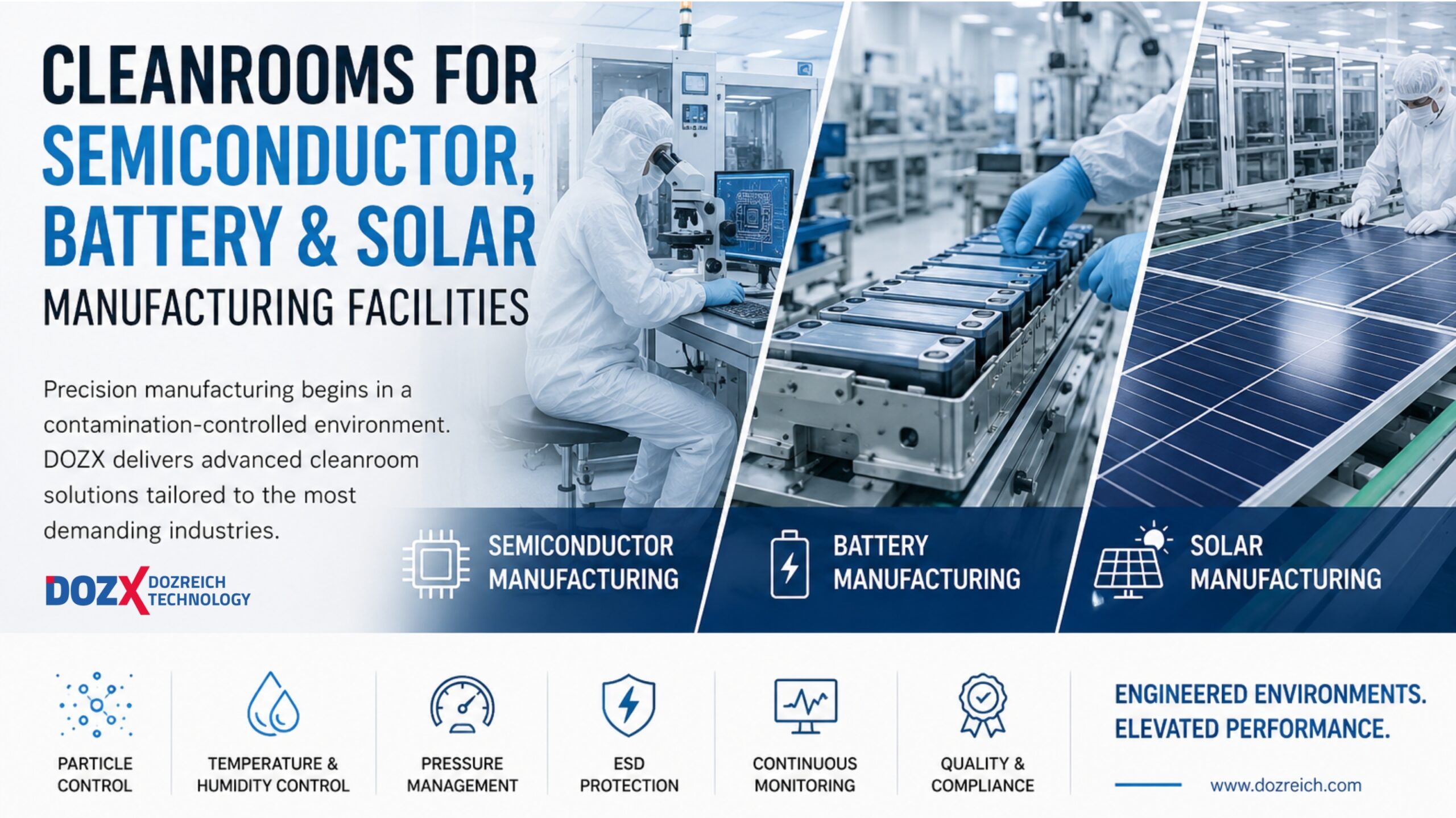
Cleanroom Standards for Semiconductor Manufacturing Facilities
Semiconductor manufacturing is one of the most contamination-sensitive industries in the world. Modern integrated circuits contain nanometer-scale features, making them highly vulnerable to airborne particles.
Most semiconductor facilities operate within:
* ISO Class 3 to ISO Class 5 cleanrooms for critical manufacturing areas
* ULPA filtration systems for ultra-fine particle removal
* Laminar airflow systems to minimize turbulence
* Positive pressure environments to prevent external contamination
* Advanced ESD control measures
Critical processes such as wafer fabrication, photolithography, deposition, etching, and packaging require extremely stringent contamination control to maintain product quality and maximize production yields.
Key Requirements
✔️ Ultra-low particle concentration
✔️ Temperature stability
✔️ Controlled humidity
✔️ ESD-safe environments
✔️ Continuous environmental monitoring
Cleanroom Standards for Battery Manufacturing Facilities
The rapid growth of electric vehicles and energy storage systems has significantly increased the demand for lithium-ion battery manufacturing facilities. Unlike traditional cleanrooms, battery production often requires both particle control and moisture control.
Even small amounts of moisture can negatively impact battery chemistry, performance, and safety.
Battery manufacturing facilities commonly utilize:
* ISO Class 6 to ISO Class 8 cleanrooms
* Ultra-low humidity dry rooms
* Desiccant dehumidification systems
* Temperature-controlled environments
* Metallic contamination control systems
Maintaining precise environmental conditions throughout electrode preparation, cell assembly, and electrolyte filling processes is critical to ensuring battery quality and reliability.
Key Requirements
✔️ Ultra-low relative humidity
✔️ Dry room technology
✔️ Contamination-free production zones
✔️ Temperature-controlled environments
✔️ Process monitoring systems
Cleanroom Standards for Solar Manufacturing Facilities
Solar photovoltaic (PV) manufacturing requires controlled environments to ensure consistent product quality and maximum energy conversion efficiency.
Contamination during wafer handling, thin-film deposition, coating, or module assembly can reduce solar cell performance and increase production defects.
Solar manufacturing facilities typically operate within:
* ISO Class 7 to ISO Class 8 cleanrooms
* Controlled temperature and humidity environments
* Particle-controlled process areas
* Clean assembly and testing zones
These controlled conditions help manufacturers improve efficiency, reduce waste, and maintain product consistency.
Key Requirements
✔️ Particle contamination control
✔️ Stable temperature and humidity
✔️ Clean wafer handling environments
✔️ Precision coating and deposition areas
✔️ Quality-focused testing facilities
Essential Components of Industrial Cleanrooms
Regardless of industry, effective cleanroom performance depends on multiple integrated systems working together.
Core cleanroom components include:
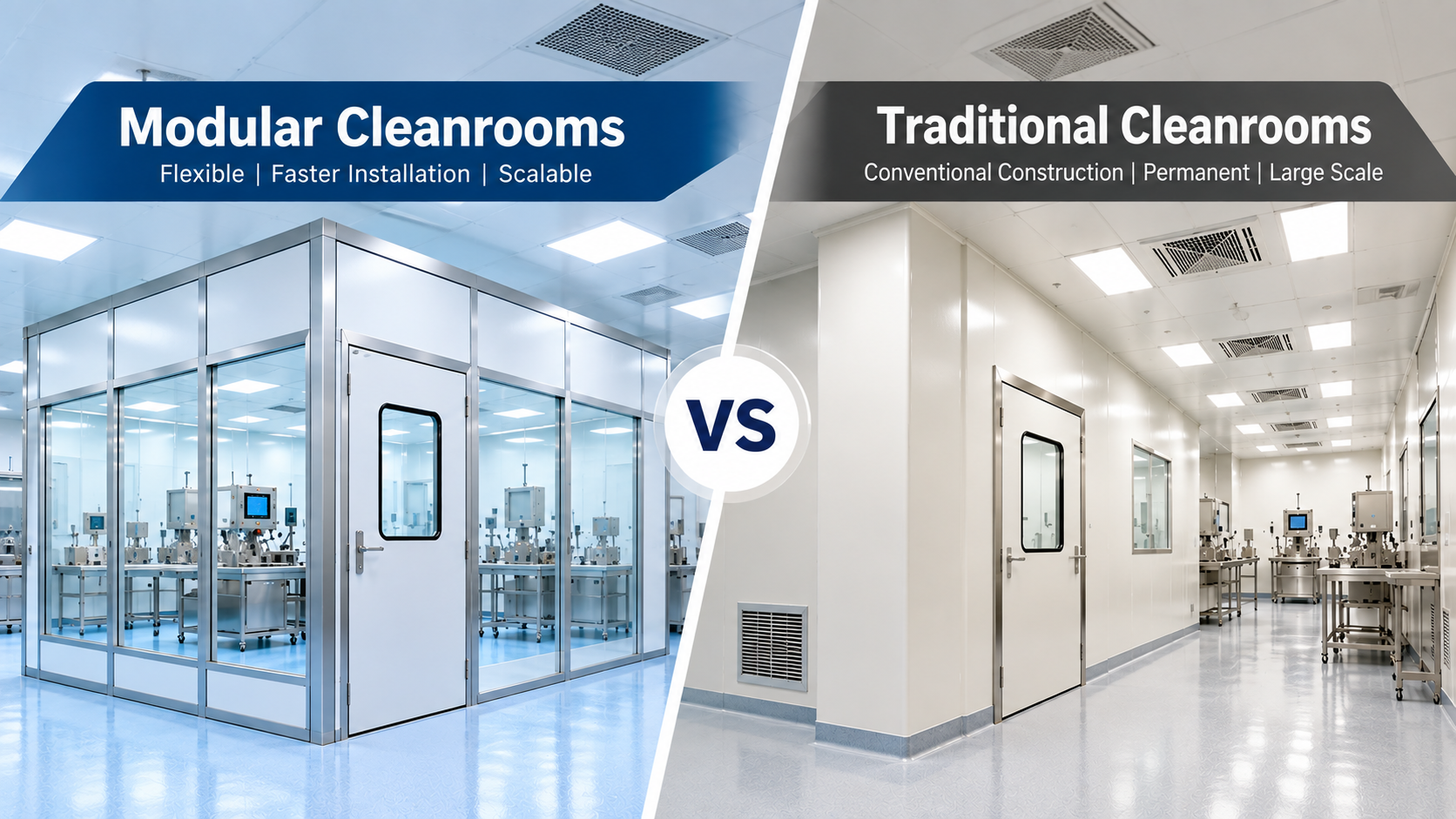
* Modular cleanroom wall and ceiling systems
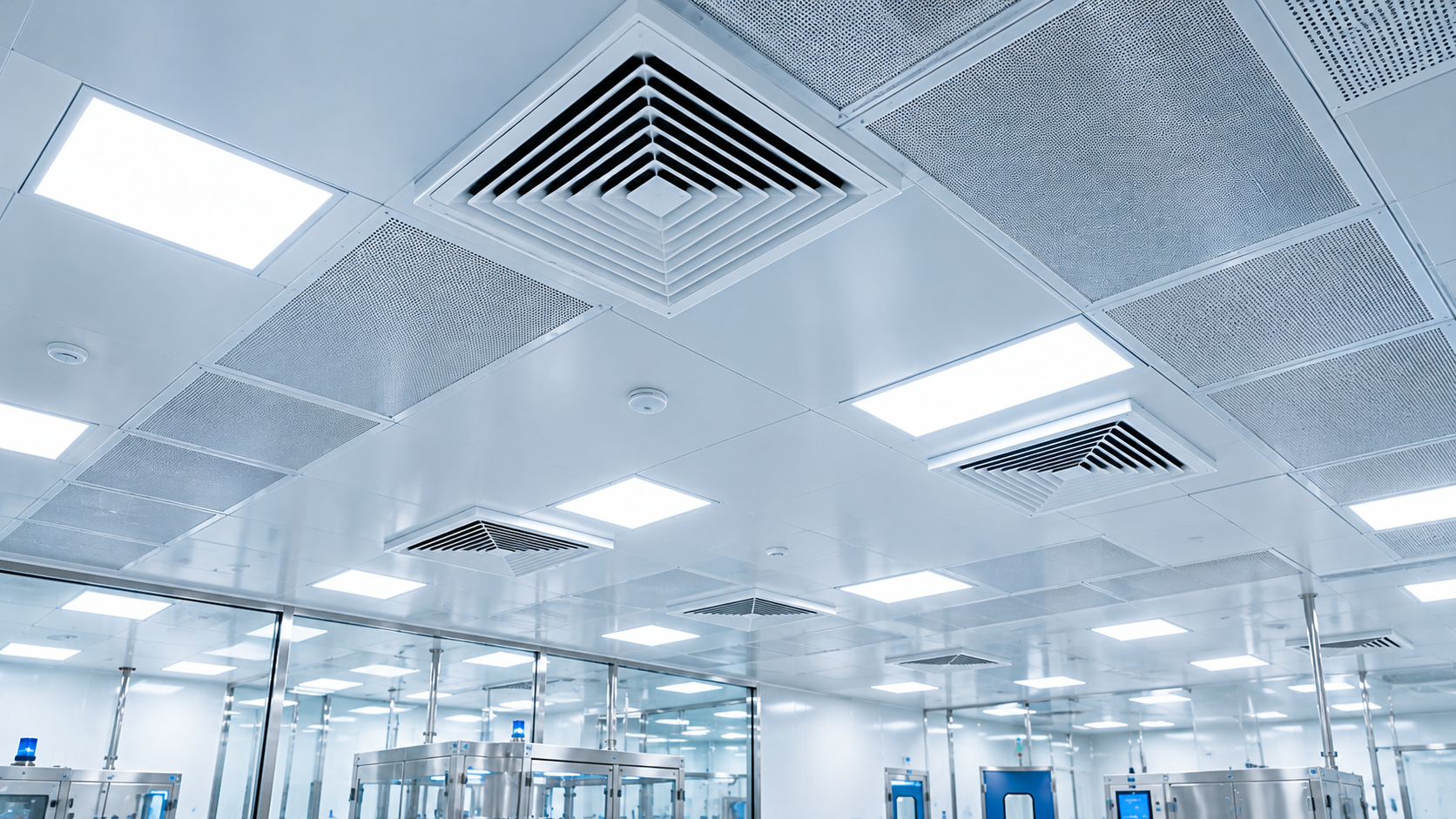
* HEPA and ULPA filtration
* HVAC systems
* Pressure cascade management
* Environmental Monitoring Systems (EMS)
* Building Management Systems (BMS)
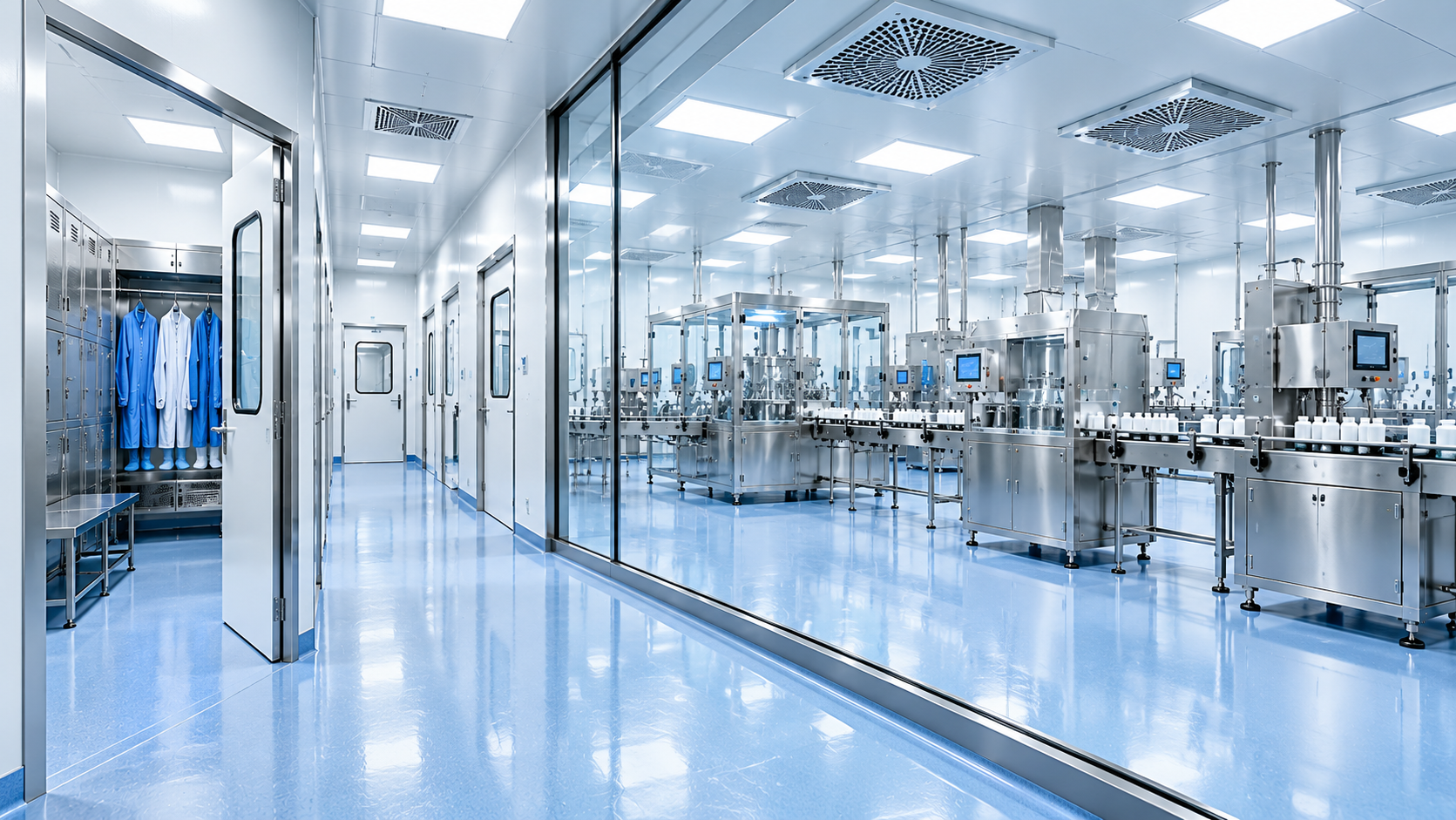
* Airlocks and gowning rooms
* ESD protection systems
* Validation and qualification support
These systems ensure compliance with cleanroom standards while maintaining consistent manufacturing conditions.
Why Cleanroom Compliance Matters
Following cleanroom standards provides numerous benefits, including:
* Improved product quality
* Reduced contamination risks
* Higher manufacturing yields
* Enhanced operational efficiency
* Regulatory compliance
* Lower product rejection rates
* Improved process reliability
For semiconductor, battery, and solar manufacturers, cleanroom compliance is a critical factor in maintaining competitiveness and delivering high-quality products.
How DOZX Supports Advanced Manufacturing Facilities
DOZX specializes in delivering turnkey cleanroom solutions for semiconductor, battery, and solar manufacturing facilities. Our expertise covers cleanroom design, HVAC engineering, electrical systems, EMS & BMS integration, dehumidification systems, validation, and commissioning support.
From concept development to project completion, DOZX provides customized solutions designed to meet the most demanding cleanroom standards and manufacturing requirements.
Conclusion
Cleanroom Standards for Semiconductor, Battery, and Solar Manufacturing Facilities are becoming increasingly important as manufacturing technologies evolve. Whether producing advanced microchips, lithium-ion batteries, or high-efficiency solar panels, maintaining a controlled and contamination-free environment is essential for quality, reliability, and long-term success.
By implementing the right cleanroom standards and engineering solutions, manufacturers can achieve higher productivity, improved product performance, and sustainable growth in today’s competitive industrial landscape.