Introduction
In industries like pharmaceuticals, biotechnology, electronics, and medical device manufacturing, maintaining a contamination-free environment is critical. Even microscopic particles can compromise product quality, safety, and regulatory compliance.
This is where ISO and GMP cleanrooms play a vital role.
In this beginner-friendly guide, we will explain what an ISO & GMP cleanroom is, how it works, its classifications, and why it is essential for modern manufacturing facilities.
What Is a Cleanroom?
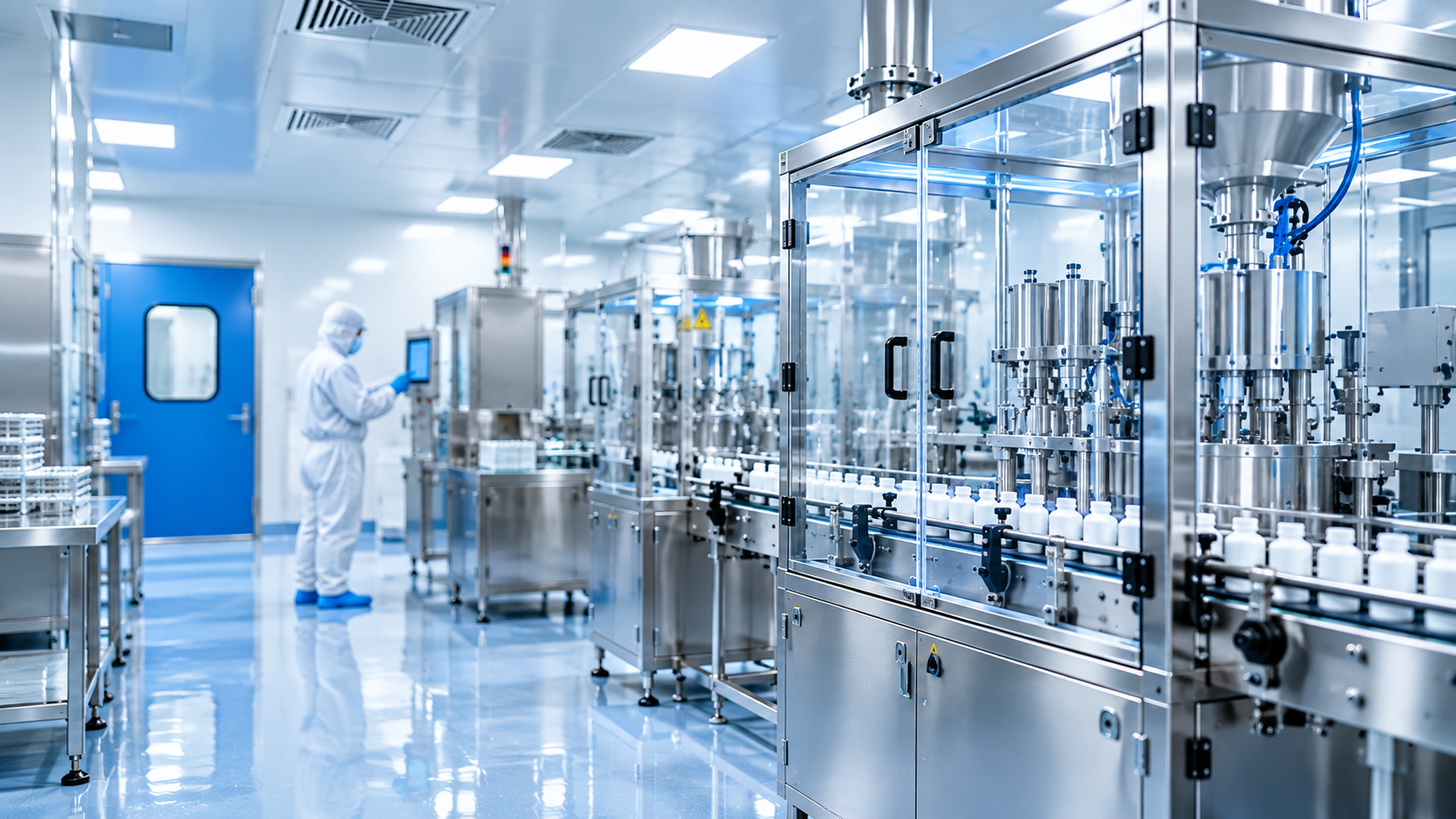
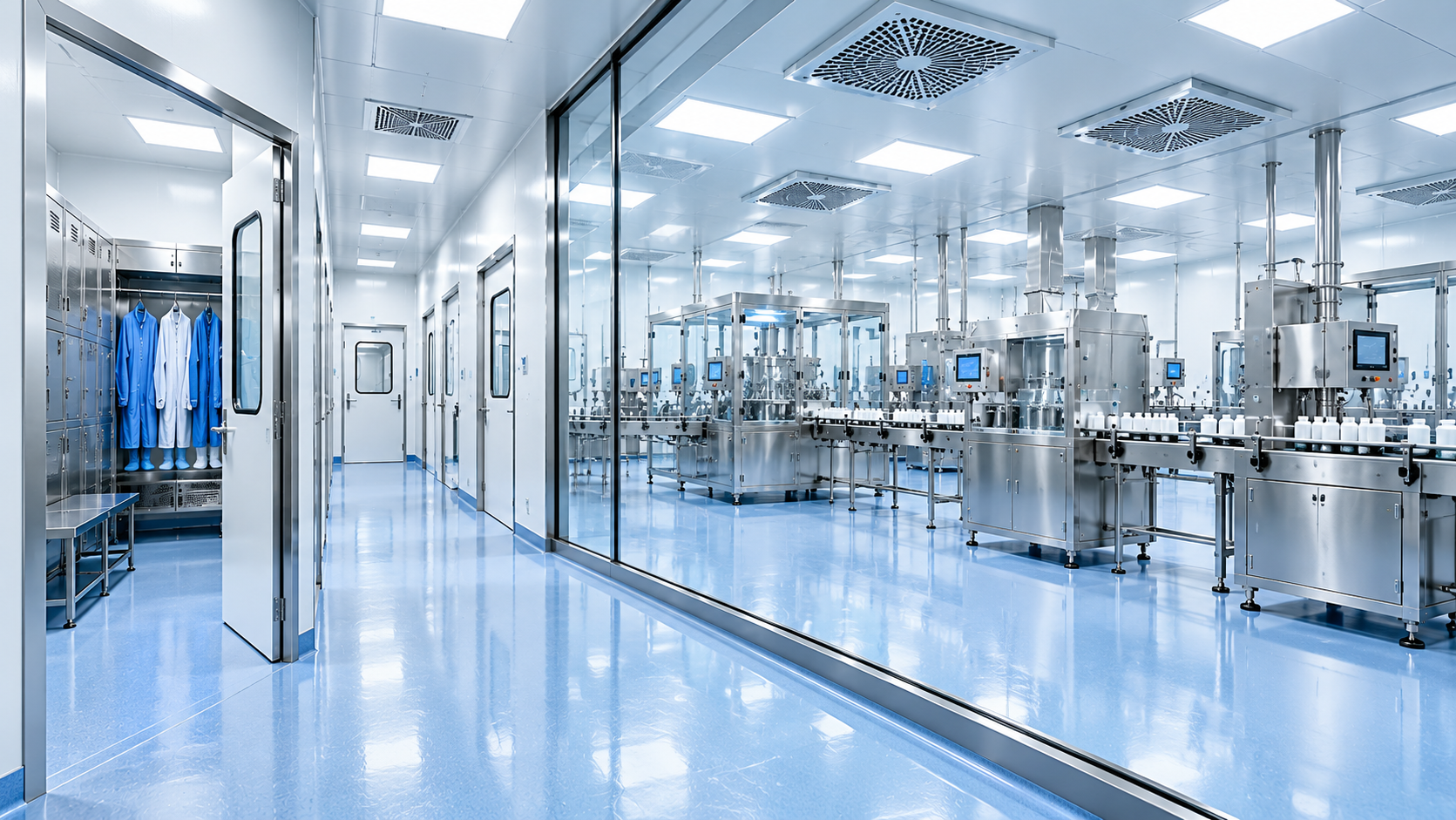
A cleanroom is a controlled environment designed to maintain extremely low levels of airborne particles such as dust, microbes, and chemical vapors.
Cleanrooms control:
- Airborne particle concentration
- Temperature
- Humidity
- Air pressure
- Airflow patterns
These environments are essential in industries where even minor contamination can affect product quality or safety.
What Does ISO Cleanroom Mean?
An ISO cleanroom refers to a cleanroom classified according to the ISO 14644 standard, which defines the maximum number of particles allowed per cubic meter of air.
The ISO standard focuses mainly on air cleanliness levels.
Common ISO Cleanroom Classes
| ISO Class | Maximum Particles (≥0.5µm per m³) | Typical Use |
|---|---|---|
| ISO Class 5 | 3,520 | Aseptic pharma filling |
| ISO Class 6 | 35,200 | Medical device manufacturing |
| ISO Class 7 | 352,000 | Pharmaceutical production |
| ISO Class 8 | 3,520,000 | General manufacturing |
👉 Lower ISO number = Cleaner environment
What Is GMP in Cleanrooms?
GMP (Good Manufacturing Practice) is a regulatory framework that ensures products are consistently produced and controlled according to quality standards.
While ISO focuses mainly on air particles, GMP covers a much broader scope, including:
- Facility design
- Documentation
- Personnel hygiene
- Equipment validation
- Process control
- Quality assurance
In pharmaceutical manufacturing, GMP compliance is mandatory in many countries.
ISO vs GMP Cleanroom: What’s the Difference?
Many beginners get confused between ISO and GMP. Here is a simple comparison:
| Feature | ISO Cleanroom | GMP Cleanroom |
|---|---|---|
| Focus | Air cleanliness | Overall manufacturing quality |
| Standard | ISO 14644 | WHO GMP / EU GMP / US FDA |
| Scope | Particle limits | Full quality system |
| Usage | Engineering classification | Regulatory compliance |
| Coverage | Air only | Facility + process + people |
✅ Best practice: Pharmaceutical facilities usually require BOTH ISO classification and GMP compliance.
Key Components of an ISO & GMP Cleanroom
A high-performance cleanroom typically includes the following elements:
1. DOZX Cleanroom Panels
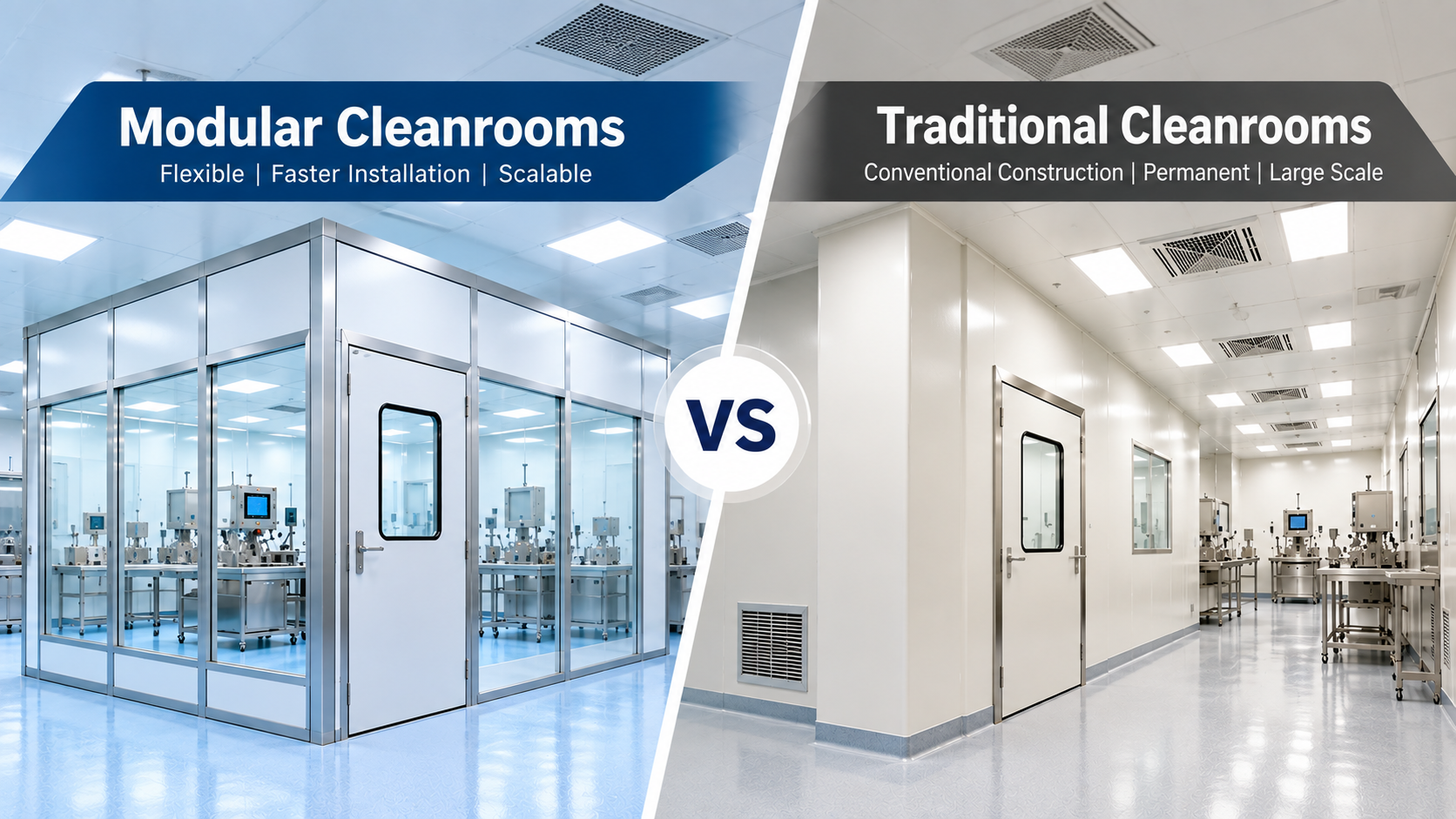
Modular wall and ceiling panels that provide smooth, non-shedding surfaces.
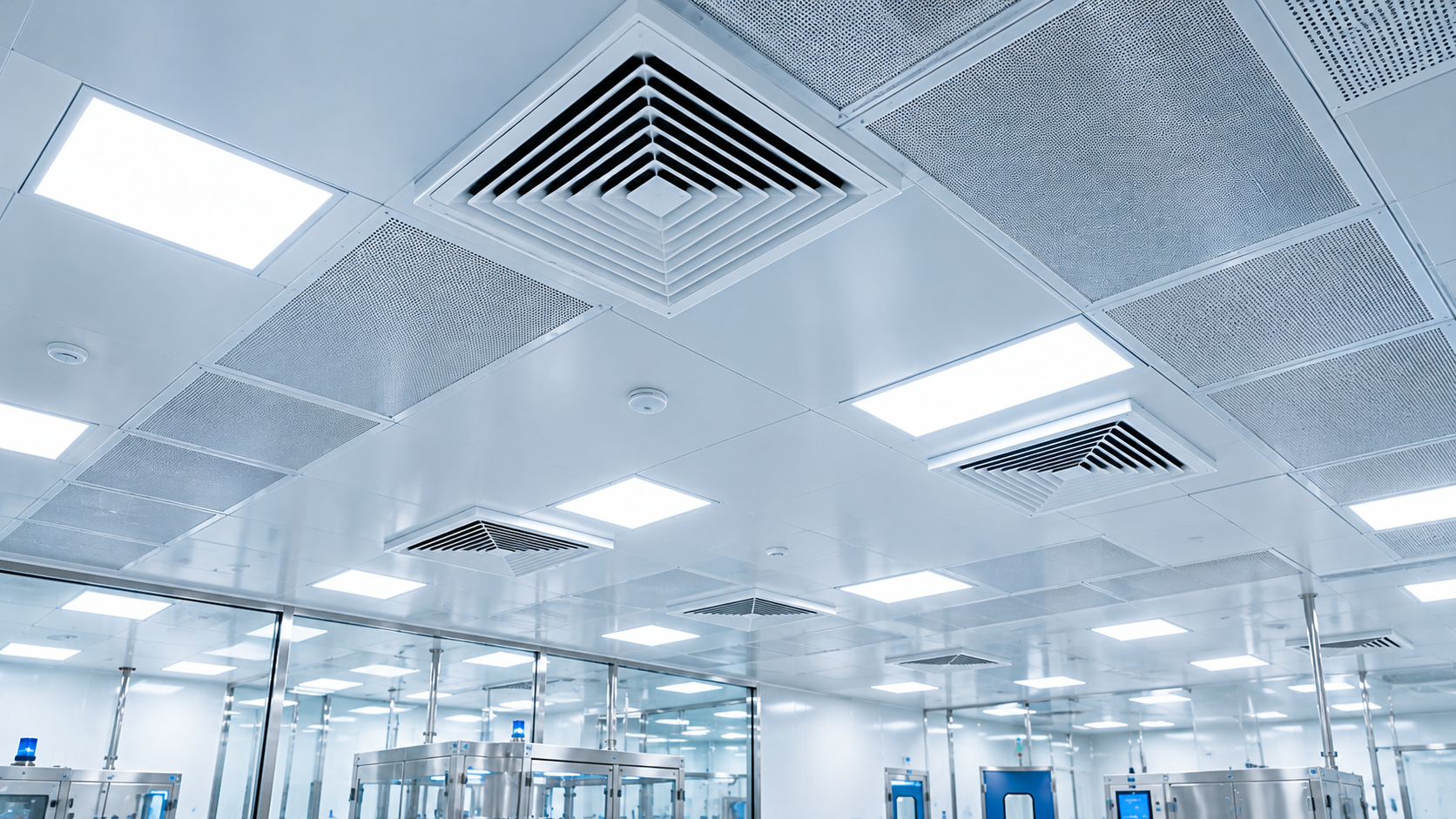
2. DOZX HVAC System
Specialized cleanroom HVAC maintains:
- Air changes per hour (ACH)
- Pressure differentials
- Temperature & humidity
3. DOZX HEPA/ULPA Filtration
High-efficiency filters remove 99.97% of airborne particles.
4. DOZX Airlocks & Pass Boxes
Prevent cross-contamination during material and personnel movement.
5. DOZX Cleanroom Doors & View Panels
Designed for airtight sealing and easy cleaning.
6. DOZX Cleanroom Flooring
Usually epoxy, PU, or vinyl flooring with seamless finish.
Why ISO & GMP Cleanrooms Are Important
DOZX Cleanrooms are not just regulatory requirements — they directly impact business success.
Major Benefits
✅ Ensures product quality
✅ Prevents contamination
✅ Meets regulatory compliance
✅ Reduces batch rejection
✅ Improves customer trust
✅ Supports export approvals
For pharmaceutical and medical device companies, cleanrooms are mission-critical infrastructure.
Industries That Require Cleanrooms
ISO & GMP cleanrooms are widely used in:
- Pharmaceutical manufacturing
- Biotechnology
- Medical devices
- Electronics & semiconductors
- Hospitals & sterile facilities
- Food processing (high hygiene zones)
- Aerospace components
When Does Your Facility Need a Cleanroom?
You likely need a cleanroom if:
- Your process is contamination-sensitive
- You manufacture sterile products
- Regulatory bodies require controlled environments
- Product defects are caused by dust or microbes
- You plan to export regulated products
If any of these apply, consulting a cleanroom expert is recommended.
Conclusion
ISO and GMP cleanrooms are the backbone of modern high-precision manufacturing. While ISO standards define the air cleanliness level, GMP ensures the entire production process meets strict quality and regulatory requirements.
For companies in pharmaceuticals, biotechnology, and advanced manufacturing, investing in a properly designed cleanroom is essential for compliance, product quality, and long-term growth.
📞 Need Expert Cleanroom Solutions?
If you are planning a new cleanroom project or upgrading an existing facility, our engineering team can help you with design, engineering, and turnkey cleanroom solutions tailored to ISO and GMP standards.
👉 Contact us today for a free consultation.